
The full, unedited video of my MA thesis is up on my Patreon. Check it out here.
Support, sharing, and comments are all welcome.
The full, unedited video of my MA thesis is up on my Patreon. Check it out here.
Support, sharing, and comments are all welcome.
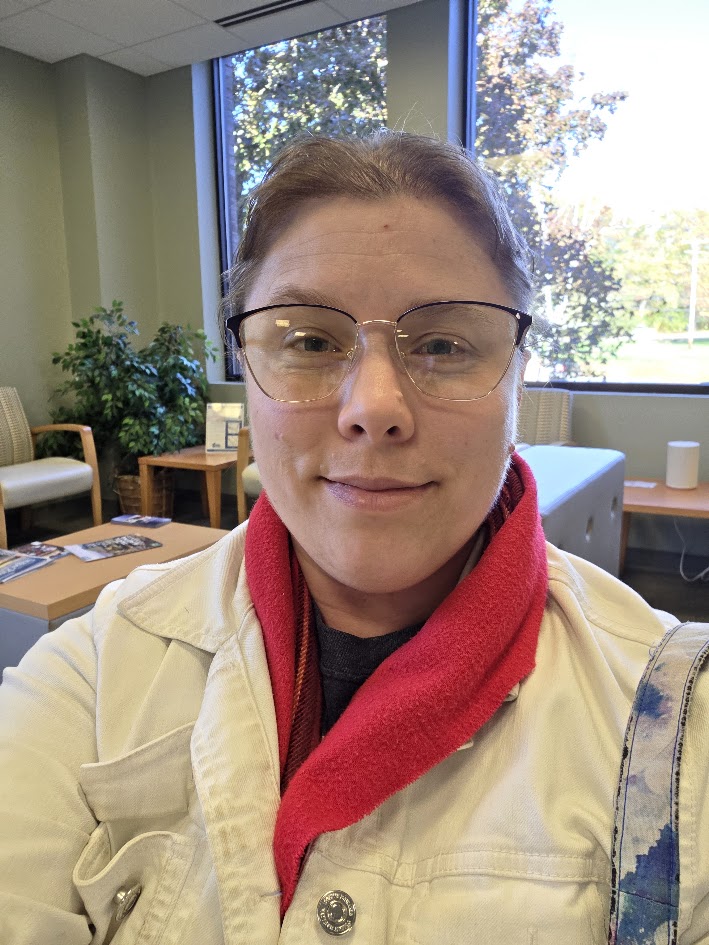
Welcome my friends!
Here to report that I have several speaking engagements coming up this fall and winter. Please check out my Events page for more details. I had the great opportunity to do historical research at many fantastic institutions over the 2 years it took me to finish my MA thesis. Now I’m going on tour to tell everybody under the sun about the untold history of 19th century New Hampshire sex workers.
This project was intensely emotional, and not just because I had a baby in the middle of the whole thing. I went into this with a liberated feminist frame of mind and ended up hitting the historical brick wall of reality at speed. I was surprised by the tragedy that I found: murder, infanticide, and human trafficking, as much as I was delighted to find madams who made enough money to pursue divorce from abusive husbands and streetwalkers who defied the statistical odds to live happy lives.
Sharing this with you, all of you, and anybody who will listen is so important to me. They say that a man does not die while his name is still spoken, so I am here, humbly, with archival dust on my hands, to put this forgotten piece of New Hampshire history back into the wider narrative of our state. It is a story that deserves to be told and remembered.
Behind the scenes writing on Stella and the Secret Stars continues.
All my best,
Kim
*Slams sideways into the chat*
Hello my friends and welcome back!
I am officially resurrecting this website from the dead, for real this time. A lot has transpired since this blog went radio silent in 2019, although to be honest it was getting to be pretty damn quiet before that. For one, the Pandemic clotheslined us all out of nowhere, for second, my wife and I kicked the trauma out of our house and have now sufficiently recovered, for third, I entered–and finished!–grad school with my MA in History & Archives, and for fourth, we also got 2 other cats for a total of three and also I had a baby. I realize that this is very much like an Ao3 excuse post but now that I can breathe, really breathe, we’re starting this thing up again.
Most of the old posts have been left untouched, except the early reviews that weren’t very professional, which I’ve deleted. I’ve had a lot of experience to weather me and my writing now, and I have a better handle on my writing voice as well as a better head on my shoulders. The world has changed enormously in the last few years and so have I, but I never really gave up on writing or history. I’m hoping to publish my thesis as a full history book and continue my research into other avenues to support that. I’ll be giving a couple talks locally on my topic, which is historical prostitution, and the dates will be posted on the events page.
In addition, I’ve decided it’s time to focus in on the future of my fiction writing. Working corporate has not worked out for my and now that grad school is done, I’m ready for something n ew. Toymaker is still here, but my real love is science-fiction, come to find out, so moving forward I’ll be taking Stella and the Secret Stars into fully polished mode for submission to a literary agent for traditional publishing. If that falls through, then I’ll continue on with self-publishing as originally planned. As promised over a decade ago, all chapters of Toymaker will remain available and free here and on my Patreon, which I am also going to go resurrect shortly.
Stella and the Secret Stars is finished but for redoing the chapters at the beginning and 2 editting passes. It’s blossomed into a 7-book story plot, with spin-off tales, and I’m excited to share more with you as things start to happen.
Rather than do influencer/vlog work, I’ve decided it’s just going to be this site and Patreon. I’m not really interested (or good at) marketing and I’m not a fan of AI or big tech. I’m also not going to jump on the romance or dark romantacy train, we have enough of that going around as it is.
I’m not here to provide a cookie-cutter book that AI could churn out in seconds. I arrive back to this writing journey with experience, steadiness, a metric shit-ton of trauma to unpack, to do what I do best: telling stories. I am going to tell the stories that only I can tell, that are made with love, and come straight from the human soul, no machines necessary.
It’s been a jungle.
It’s been hell.
But I’m still alive. See you soon, my friends.
Kim
I’ve been battling about a year’s worth of depression by now so please forgive my long silence. When you’re trying to keep your head above water it’s hard to be creative. The good news is that I think it’s coming back. Toymaker has been in the works for me so long that it’s a complicated dance to re-enter, but I am making every effort to try.
In the meantime, here’s a short fiction piece I wrote yesterday, taking place in the sea-side city of Rimsea. Arkady is new on the field of characters and I’m still figuring her out, as well as the whole story of Rimsea itself, but that’s what makes it all so exciting.
Normally I would post this as a reward tier, but I’ve been absent so long I want you all to have something to look at.
Toymaker is coming soon, I promise.
Thank you.
~~
A wind swept out of the south, bringing with it the promise of storms.
On the highest floor of the tallest minaret this side of the Steep Arkady Gilraeth crouched in the window. The red sash that she used to cover her mouth hung down, loose around her neck. She shifted, minute recalibrations of weight that allowed her to maintain position. Somewhere out there, in the darkened city, others such as she began their nightly preparations for mischief.
The pale woman frowned, and the expression pulled stark freckles across her face. That is, the skin beneath her face.
Arkady was Rimsean by birth, but a foreigner by blood. She reached up and flicked the mask-face down over her eyes. The static features of a white lion, rendered in polished porcelain, snarled out at still-sleeping Underhill.
Far away, above the Steep and in Rimsean proper, a bell began to peal. The next tower took it up, this one with a deeper voice than the first. Soon all the bells in the city were ringing, a music unlike any other.
The Quiet had begun.
Arkady spun, wisps of crimpy, orange hair flying out from beneath her hood. She dove, out over open air. Air rushed by her as she fell. That was a better song; silence born from wind.
In those moments Arkady felt free. She reached out her arms on either side of her, barely aware of the tower whipping by. There was nothing like it.
With a single, fluid motion she uncoiled the rope at her side and threw her grappling hook. The rope had been made special, and imbued with enchantments on a regular schedule. It had never failed her yet.
One hand held the rope, even though the other end was securely fastened to a wide leather belt around her waist. Dimly, she heard the ka-chunk of the hook’s teeth as they made purchase. The length ran out, away from her, and Arkady put both hands on the rope now. Her whole body tensed.
The rope went taut and she grinned as the resulting snap reverberated throughout her body. Arkady turned and swung, holding her knees close to her body, leading with her feet. Her back arched as she reached the top of the rope’s scythe. A deft tug released the hook’s teeth from its perch, but the momentum from the swing was still sending her up. Another toss, this one aimed perfectly as well, and the hook caught the edge of a roof. She went down again, powerful arms moving in just the right way to shift her weight and get the most out of each arc.
In this way she crossed Underhill, swinging up and down, only occasionally having to push herself off of buildings or chimneys to get the power she needed. Only leather and linen hissed as she moved. For one such as her, silence and mobility were key.
Arkady hit the Steep at top speed. At the top of her arc off the last minaret she wheeled her arms, holding her hands out. The wall that divided Underhill from Rimsea was peppered with handholds–not one of the sandstone bricks had been laid even, but it was not for those that she aimed for this time. Other nights, nights when she felt like showing off, or she needed that several second advantage, that was when she would take the risk. But not today. She landed on one of many drain pipes sticking out of the Steep and kept running. Compared to flying it was nothing, but speed was of the essence.
By the time Arkady reached the top of the Steep, sweat beaded on her brow and ran into her eyes. She blinked hard. Perched on the wall she did a quick sweep, counting the stiltwalkers in sight and the Annies who walked abroad with their crimson lanterns. It would not do to be caught by either. Not just in general, but especially now.
In the city of Rimsea the Quiet–rang twice a day, once at sunrise and again at sunset–was the hour of curfew. No business could take place and no one but the Annies were allowed out on the streets. So, naturally, it was time for the men and women of Underhill to do their work. Here, time did not exist. Secrets could be spoken, pacts could be sworn, lives could end.
Arkady flexed her fingers, trying to get the ache of climbing out of them. Yes, the Quiet was a time unto itself, whole and complete. And, to people like her, full of fools.
One glance was all she needed and then she was off again, across the rooftops on foot now. She scaled towers and domes with practiced ease, far more at home with seeing the city from the vantage point of a bird than from the streets below.
At last she reached her target. By now the second set of bells had rung, signaling the curfew’s end. She had to move quieter, slower. Even that was a test of skill that she did not mind, though, and as she padded unseen across balconies with people just inside, the red-head grinned to herself.
The house in question sprawled like a sumptuous whore amongst the other buildings, its turrets and gardens as numerous as its many ornate archways and chuckling fountains. It spoke of wealth and taste, but not necessarily of excess. Most fine estates built up, seeking the ever-present sun, but this one had built out, carving for itself a niche of unique beauty in a city that stretched constantly upward. The sides of the house gleamed, as pale as the moon. Frescos covered certain walls, carrying the play of live greenery onto stone.
Arkady swung herself over the spiked outer wall and into the garden. She landed with a soft hush and stopped, breathing hard.
To her left ran a long pool, bordered by a blue mosaic with white stripes, to the front was a shaded patio. Carefully flitting from shadow to shadow Arkady made her way inside.
Strange…there should be guards all over the place. Her slippered feet made absolutely no noise on the marble tiles. She fletched herself into corners, always keeping a wall or furniture between her and the rest of the room.
At the top of the stairs she paused, holding her breath. Something stirred nearby. Not a soldier, certainly no Annie. Akady nudged her forearm against her body and a blade fell into her palm. She gripped the leather-wrapped handle, eyes narrowing. So slowly that the time spent moving felt like it exposed her more than her actual position, Arkady leaned forward and peered around the corner.
There, lounging in front of the doorway to her mark’s room, lay an enormous black panther. His sides rose and fell evenly, peacefully asleep.
Arkady leaned her head back against the wall and cursed silently. Something made her cock her head. She strained her ears and then sighed heavily, biting her lower lip to keep from huffing out loud.
If there was one tenant she had learned in all her training, it was patience. Patience she had in abundance, but she couldn’t wait here.
On silent feet she made her way back down the stairs and out into a side garden. Then, being careful to time her toss of the hook with the rhythmic creaking of the bed just inside, she hoisted herself up onto the balcony and quickly scrambled into position on the roof. Arkady had just enough of a glimpse inside on her way up to map out the room in her head. She hid on the eave above the balcony, flattening herself so as to be less noticeable.
The room would be round, with several hanging curtains to obscure the bed. From the sound of things, her mark was…enjoying herself. Clearly indulging in some forbidden carnal pleasure with her mistress instead of patrolling the halls like a good little pet.
Arkady frowned. At least she couldn’t see them from her vantage point. Hardly a blessing, but thank Moira they were quiet about it.
She waited for what felt like hours, while all the adrenaline went out of her and stiffness crept in. On a rotating basis she flexed each muscle group, trying to keep herself alert as well as limber.
Finally, the noises from the room below shifted to the heavy breathing of two people drifting off to sleep. Heaving herself up, Arkady stopped cold when she felt the icy touch of steel on the back of her neck.
“Turn around, slowly.”
“Oh fer fuck’s sake,” she hissed, but did as she was told. The moment she did the one sight an assassin never hopes to see sent shivers down her spine.
Standing above her was a dark-skinned woman of petite stature, yet commanding presence. The wind off the sea tousled her raven hair. She looked into Arkady’s green eyes with a gaze like flint. And she had no face.
“Oh fuck,” Arkady said again. “A fucking Faceless.”
Rimseans feared few things in life. The storms, the Citta Rozans, and the Faceless. Everyone in Rimsea had a face, except those few who were insane enough to go without them. Outsiders called them “masks”, but the people in Rimsea knew the truth. Your mask was your face, and you wouldn’t be caught dead without it. To do so would be…beyond repulsive. Hideously ugly. Disgusting.
Arkady couldn’t afford to look away. Dimly, she wondered if her mark would be maskless when she sank her blade into the woman’s chest.
“Why are you here?” the Faceless demanded. A necklace with a crescent moon on it gleamed at her throat.
“I have a job to do, what do ye think?” Arkady spat back in her thick, northern Wharite accent. It wasn’t local, but it was the way her parents had spoken and she was stuck with it. “I’ve been paid a fair price to get rid of the courtesan’s bodyguard. Word is the crazy bitch broke some Pasha’s nose when he didn’t pay on time–”
The Faceless cut her off, the dagger pressed on Arkady’s chin. “I don’t care. My job is with the lady of the house.”
Arkady couldn’t help a scoff. In spite of the danger she felt the whipcrack of sarcasm enter her voice. “Oh tha’s just grand, isn’t it? I get the guard, you get the lady. Next thing you know it’s all over town and a lover’s suicide besides! Don’t you have any sense of class? Go find yer own roof to haunt and stay outta my way–I was here first.”
High above them clouds rolled across the moon. A sliver of silver light swept across the tiled roof, illuminating a shade of darker black on the nearest spire. White teeth flashed on a dark face. “So nice of you to notice,” purred a man’s pleasant tenor. He dropped down, bell sleeves billowing.
At once the Faceless curled her mouth in a silent snarl. “Thessaly Darkspring, you cheating bastard. I thought we had an agreement. No overlap on contracts.” She flicked her wrist and a second dagger fell into her free hand.
Thessaly shrugged eloquently. A sweep of pure white hair fell over his shoulders and his full, black mask gave the impression of a high-cheekboned face and a satisfied smirk. Or perhaps that was a trick of the light. “And I’ve been hired by a rival Pasha to make sure the lady comes to no harm at all, Kiraz.” He snapped his fingers and blue globes of foxfire appeared over his head. The cerulean tinge made the fire look cold, but Arkady had no doubt that it could burn her just the same. “So, it seems we are at an impass.”
“You…you’ve got to be kidding me,” Arkady gaped. “Three contracts–all fer different things–on the same house? On the same night?”
Kiraz–the Faceless–did not take her eyes off Thessaly. “It must be true. Hmph, inconvenient.”
“Isn’t there a law against usin’ magic against other folks?” Arkady asked, trying slowly to get into a better position so she was at less of a disadvantage.
“That’s Tamric law, I’m afraid.” Thessaly shrugged again. Oh, he sounded so smug! “And who cares what Rimsea says? I was hired for one purpose, and to that end I am allowed to do as I see fit.”
Kiraz grimaced. Arkady could tell they were thinking the same thing: neither of them could cross a mage and expect to win.
“Bow out gracefully,” he continued. “Tell your employers this house is too well-protected. You’ve tried, you’ll lose no face–pardon the expression, no offense meant.”
“None taken,” Kiraz said, tightly. The muscles on her jaw twitched. “I suppose the only one of us who gets anything tonight is you, stranger,” she added, glancing at Arkady.
The assassin pointed to herself, incredulous. “Me? Ye must be mad. I’m not goin’ after the guard if I know this fucker’s hanging about on the roof. How–” Here she turned and regarded Thessaly with as much pomp as she could muster, given that they had to be quiet, or else risk waking the entire estate. “How on earth am I supposed work now? I can’t just drop in, stab the bitch and be done with it. It’s not classy…it’s not right.”
Kiraz rolled her eyes. “For Vitas’ sake, it doesn’t have to be classy, it just has to be done.”
“I can’t just drop in and leave blood everywhere like I’m some kind of ammature–”
“Ladies, ladies, please.” Thessaly strode closer, one hand still up and ready to rain thaumaturgic foxfire down on them. “There’s no need to argue. Move on, yes? Live to fight another day and, ah, all that?”
Arkady could have bitten him. Anything to take the sting of pride out of his voice. In the end, both women acquiesced. How could they not? You don’t bring a knife if the other person has a bow, and you certainly don’t attempt to win against a mage with only cold steel in your hands. Besides, she’d seen the tell-tale shimmer of protection magic around him. Any weapon she tried to throw might turn around and come back at her, and–while she knew she was willful–Arkady wasn’t stupid.
They both left, skimming across the rooftops in opposite directions. Kiraz had insisted and Arkady was only too happy to oblige. True to his word, Thessaly did not fire on their backs. He allowed them to leave unmolested.
After they were gone he took Arkady’s spot on the eave above the balcony. “All’s well, my lady,” he said.
“Thank you, Thessaly,” came a soft, feminine voice from below. “Do you think they’ll be back?”
“Tonight, no.” He stretched and flexed his fingers. “Another time? Oh, certainly.”
A soft sigh. “I’m counting on you.”
“Of course.”
The mage scanned the city’s varied horizon, only just able to make out the dim silhouette of Arkady as she landed on a roofline some several hundred yards away. “A new player enters the game, hm? Well, we’ll just see what you do.”
We’ll just see, indeed.
Okay! I’ve just finished scheduling my short story posts for all my $15+ patrons on Patreon for the foreseeable future. Next is a few crafting projects at home and then it’s back to Toymaker. I hope to have something up for the rest of you soon. If you’re hoping to see what else I’ve been working on please consider joining Patreon and supporting me in any way you can. 🙂 Every little bit helps!
Love to all,
Kim
Some victories are triumphant, others hollow.
If you like this you can support me on Patreon.
Jacques
“…There is beauty in nature, it’s true; beauty in a drop of rain, in the bend of grass. There is beauty in a woman’s smile, grace in her movement, a muse in her voice. A courtier–lord or lady–sees only the surface. They cannot know–for how could they?–the measure of beauty’s true depth, its width or character. They cannot see the perfection of the very structure that imparts such grace, they refuse to think of the bones beneath, the beating heart from which passion comes. They will not see you, perhaps even Octavian will not. But I see you, Trimaris, I see you still.”
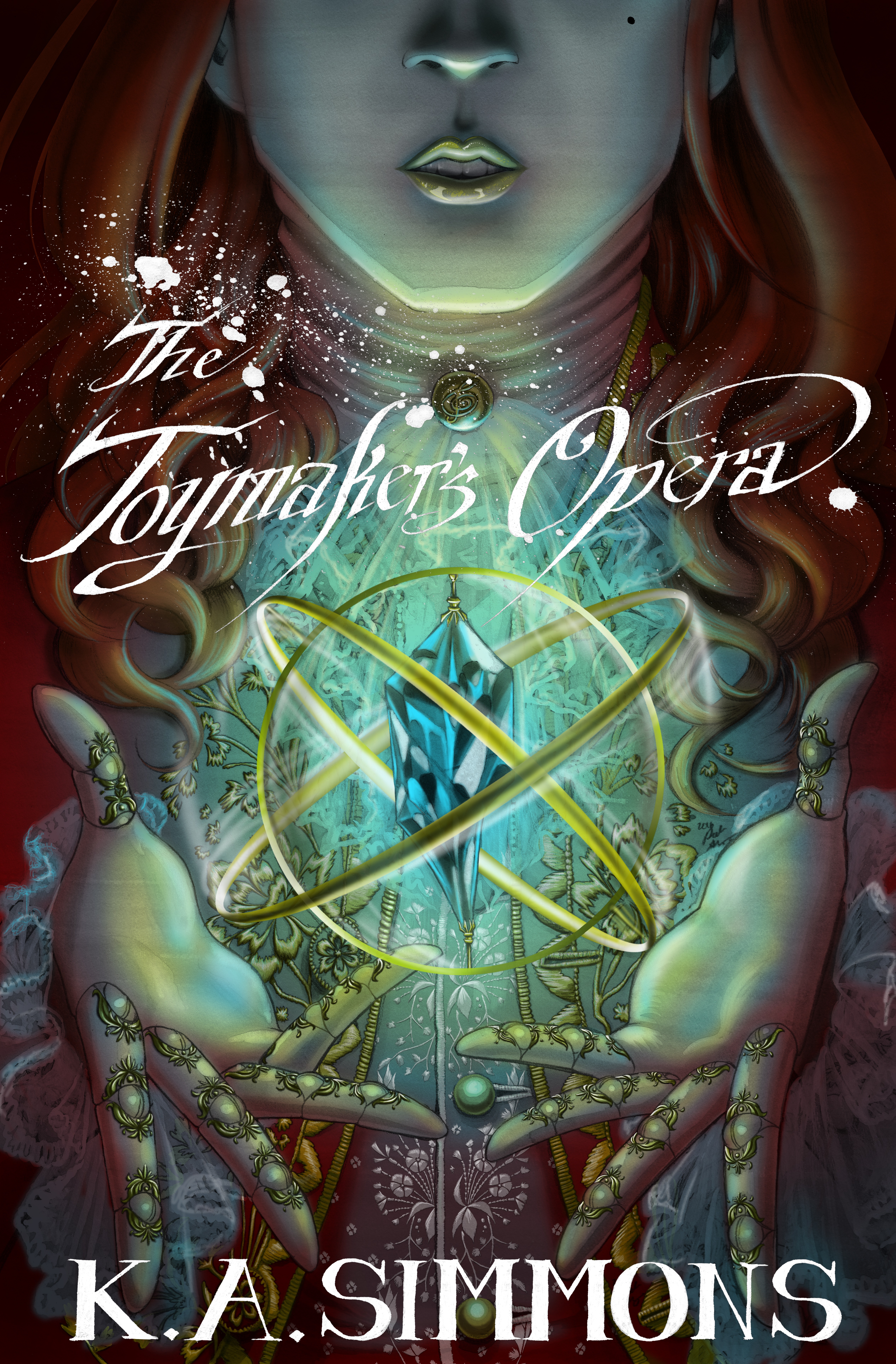
Jacques lifted the scroll of sarapin amber from his lips and placed it carefully between two golden brackets. Once the scroll sat firmly in its holdings he enclosed it with gyroscopic rings–the same that spun around Alonzo’s heart. Then he set the flagellae, like tines on a music box, on either side.
The contraption, more like an orrery than a heart, hung suspended in the air by a long strand of copper wire. Instead of ending at the ceiling the wire traveled the length of the room, grounded by a series of glass insulators that Jacques had rigged to the stone. The wire turned down once more at the very rear of the shop, marching along the wall until it disappeared inside a mahogany box with a handle at one end.
“Not yet, Alonzo,” Jacques chided without looking, certain that the young man was reaching out to touch some part of the assembly. “Return to your studies.”
Alonzo did, sulking back to the sofa where he flopped in a dramatic flounce of silk and lace. His curled, auburn wig spread out over the arm of the sofa, and he rolled his blue eyes pointedly several times when Jacques did not immediately turn his attention.
The toymaker ignored him out of necessity. For one, bad manners should not be encouraged, and for another, he could not afford to be distracted.
Breathing evenly so as not to disturb his hands Jacques hung Trimaris’ long spine from the wire, its interconnecting parts clinking softly. Without hesitation he set the heart’s cage upon it, listening for the gentle click and locking of sister pieces.
His palms, slick with sweat, slipped at the last moment. Jacques reeled back, coughing violently. A hitch in his throat, heretofore barely noticeable, spread out like sandpaper and he leaned hard on his workbench for some moments.
“I’m fine–oh, thank you,” he gasped as Alonzo appeared at his elbow, holding an empty kettle. “Yes, tea would be nice.”
The young man hurried off, clutching tight to the vessel.
“Damned winter.” Jacques resisted the urge to clear his throat and went back to work. Moments later the fit returned and he left the spine hanging there, making his way to another workbench instead.
Ordering the parts for Trimaris had been no issue. The trouble, it seemed, sprung from the obscene length of time it took for his order to reach its destination–in this case the ivory sellers and gold mines of Ombolan–and return with product in hand. He had intermediaries he could rely upon, but he did not trust the Baron’s patience, or the man’s sense of injustice if the project was not finished in a timely manner.
The construction of the Lady Trimaris was as far different from the creation of Alonzo as it was possible to be, and still be made of the same materials. While Alonzo was a labor of love, his every piece meditated upon and selected over a period of years, Trimaris’ project required something more expedient, yet no less demanding.
Instead of making the limbs as they were needed Jacques had purchased and shaped the ivory ahead of time. Forearms and calves lay in neat, gleaming rows upon the bench, exactly the right size, tapered and carved to give a suggestion of muscle. The golden fixtures and cobalt ball joints rested in padded boxes, each one meticulously labeled.
For his part Jacques move to a bench that held an assortment of gears, cams, and other intricate clockwork. He pushed his jeweller’s glasses to the side. Though he could not assemble, thanks to the coughing fits he constantly had to smother, he could at least spend his time productively. He passed the afternoon measuring and counting pieces, consulting the sheafs of paper on which he had sketched ideas for Alonzo’s inner workings, so many years ago.
Almost as soon as he had sat down–or, at least, it felt that way–Jacques felt Alonzo rap the edge of the table. He looked up, bleary-eyed, from his work to see the young man holding a steaming mug of tea.
“Ah, yes, thank you,” he said and took a deep draught before turning to spit it all out on the floor.
Cinnamon bark, almond slices, orange peel, and dried cranberry floated innocently in the mug. Jacques took a deep breath and picked a whole clove out from between his teeth. “I suppose you put that all into the kettle, didn’t you?” he asked, rubbing his face when Alonzo nodded. “I thought so.”
Jacques stood and stretched. The time was half past six in the evening, the supper hour come and gone. Jacques shook his head to clear it, for he could hear music. The sound faded after a moment, and the words he had thought Alonzo was saying disappeared. When he looked around the room once more he saw everything in order; the gramophone still and his charge taking care to clean up the tea he had spilled.
“Don’t, I’ll do it,” he said, leaning down. “You’ll only stain your clothes.”
Alonzo motioned to the kettle, beaming. He mimed pouring another cup and drew a question mark on his slate board.
By the time Jacques had convinced Alonzo that thank you, no, but he did not need any more tea, it was a quarter past seven. The toymaker bundled himself in a thick, wool coat, his every action closely observed.
Hastily, Alonzo scribbled a question on his slate, the suede gloves making it much easier for him to grip the chalk. Where are you going? he asked, his cursive slanting slightly in his hurry to get the words out.
“To the Pharos Physick. No, not for tea. Well, not exactly.” Jacques placed another few cords in the stove. It didn’t need to be warm for Alonzo, but he’d need the warmth himself when he returned. “For medicine, for–” Jacques broke off into a cough, and made a wordless encompassing gesture. “–for that,” he said when he could breath again. “I’ll only be gone an hour or so.”
And then dancing?
Jacques resisted the urge to chuckle. “Perhaps, my darling. I am quite tired.”
Before he left he swept a new set of curtains across the shop windows themselves, the better to keep out prying eyes in case Alonzo wandered out among the display cases. “Read your books and be good,” he instructed before hurrying out into the cold.
There was a taste of mist in the air, a wetness that spoke of late winter. It was only a hint that the season was beginning to change but Jacques jogged out of the close, his breath turning to fog just the same.
People passed him in blurred shadows, blurred for the cold made his eyes water. He walked swiftly, pressing a scarf to his face.
Up Brigid’s Stair he climbed, ignoring the gossip of seers as they set up for their shivering carnival.
“–down the city.”
“–’is men on the move, tha knows–”
“Kittens! And two of ‘em got inta the miller’s. That was a disaster and no mistake–”
“Goddess with thee, Don; a srir for your thoughts?”
Jacques shoved aside a rather enterprising man, clean-shaven and wearing too many mismatched colors. “It’s ‘Sar’ to you,” he snapped. “And I’ll thank you not to go reaching for my purse.”
The man huffed and did an about-face with his nose still in the air. “I wasn’t even–the nerve!” he began to his friends.
Jacques put them out of his mind. When he finally reached the lifts he paid his fare and sagged against the bars. Another fit came, harsher than before. It made his throat feel hot and raw to cough, but he couldn’t help it. “Better than last year, at least,” he mumbled, and stamped his feet to keep warm.
Rather than the quick visit Jacques was expecting at the Pharos Physick, the line stretched down the steps and to the street. He shuffled into place and turned his back to the wind coming off the Teeth.
The Pharos Physick was hub for healers–those with magic–and medickers, who had achieved their prowess through rigorous study. Positioned at the very edge of Tawny’s Gain, equal to Copperlight in height but on the southernmost tower instead of the middle, the marble building caught the last dredges of dusk. Its archways stood open to the air, more like a temple than a place to bring the sick and dying.
As Jacques took the steps one at a time he saw a Citadel mage step up to the archway–so identified by his ring of office and his expensive jacket. The man ran his hands along the stonework and made a delicate gesture, as though he were putting the tips of his fingers against a spiderweb. He moved on, doing the same motion all around.
By the time Jacques reached the archway he could finally feel the effect of the magic, even if he couldn’t see what was causing it. Somehow, between one step and the next the wind died and the rattle of the Sheer itself quieted. Jacques knew he had crossed a kind of barrier, made to keep out the Phage and whatever ills could be borne on the air. He glanced at his feet and saw that his shoes left tracks of soot on the otherwise clean floor.
No, not clean; clinical, for he could smell astringent concoctions and medicines. Despite that, despite the apprentices running to and fro scrubbing floors and the steam issuing from a laundry in the back, there was a sourness underlying it all: the fetor of sweat and blood and vomit and open sores.
Jacques could see nothing of patients themselves, for the entire Pharos was crisscrossed by white curtains, making of each bed its own island. It was not like the infirmaries that could be found lower in the city, where the cots were shoved up, practically against one another, and there was little sanitation or knowledge of it.
Still, the toymaker covered his mouth, and closed his ears to the sounds of suffering. One madman nearby would not stop screaming and so Jacques pictured Trimaris’ pieces before him. He called up the diagrams he knew so well, subtracting cams and adding an escapement. From the beginning of the clockwork–the heart–to the minute bellows for the canvas lungs, which he had not yet attached, he walked through the assembly like a bricklayer setting one stone after another.
But if–Jacques stopped that thought before it could fully manifest. Trimaris would live, the fortuneteller had said so. She had said and so he must believe.
“No, I’m afraid I can’t.” From the head of the line, now only one patron away, came a familiar voice that wakened Jacques from his reverie. “The man in question must come himself for a diagnosis.”
A Rimsean man put both his hands on the secretary’s table. He wore a velvet vest with a double row of brass buttons and his oval mask had the design of a desert owl, its sweeping brows made with tiny mosaic tiles. Instead of a mouth piece the lower half of the mask was blank and the man’s voice came out with a curious echo.
“I’m telling you, I’ve got a fellow who’s too sick to leave the Shade. He needs as much whiteburn powder as you can spare.”
The secretary drew himself up to his full height, though he remained sitting, enough so Jacques could see that it was the same red-haired healer who had kicked him out of the Carnival. He, too, leaned on the desk, bringing himself face to face with the Rimsean. “You think I don’t know what you use it for? I’m no alchemist but I don’t have to be. Lacing your Hex with whiteburn until your victims are too stupid to say no to you.” Sebastian held up his hand. “No, don’t tell me. Spare me your excuses. Now, remove yourself from my Pharos or I shall do it for you.”
“But, Master Way–”
Sebastian stood. The Rimsean fled.
“That’s what I thought,” the healer said, scratching out a quick note. He called an apprentice over and handed her the paper. “Take this to the other physick houses and infirmaries in the city. If those drug runners want to prey upon the unsuspecting people of this city then they’d damn well better find another avenue to do it. Now, go.”
He watched as the girl ran off, and combed a hand through his wavy, close-cut hair. “This would be so much easier if guilds were permitted–ah, yes, how can I…”
Jacques stepped up and held out his hand. “Master Way.”
“Master Augusti.” Sebastian frowned but took the proffered hand in a firm grip. “I don’t have any–oh my,” he said, as Jacques broke into a rough-sounding cough.
One quick reach into the crate next to him and Sebastian produced a bottle of green liquid, in which floated one dark leaf of mint. “Put this in your tea every day, twice a day until the symptoms begin to ease. Take your liquids and your rest. When do you get to bed?”
“Nine, promptly. Most nights,” Jacques replied, muffling the cough in his sleeve.
“Is that so?” The healer did not looked as though he believed him. “Make it seven. Close the shop for a day or two longer, I’m sure you can afford it.”
Jacques balked. “I have commissions–”
Sebastian’s green stare silenced him almost at once. He pointed at Jacques with the tip of his quill. “Verandi you may be, Master Augusti, but even they must bow to time in the end. You need more rest than you think, and I dare say your days of working long past midnight are almost over.”
“I came here for medicine, not personal opinion,” Jacques snapped, holding himself stiffly. He dropped a few coins on the table, turned on his heel, and walked away.
Sebastian caught up with him on the steps of the Pharos. “I don’t know if you found what you were looking for but you cannot allow yourself to have any contact with those stones, they–”
“I know what they do,” Jacques said briskly, not looking at the healer as he put on his gloves. “Perhaps better than you.” Without another word he continued on his way, putting his face into the wind.
At the doorway to the close in Wrightsward, an iron gate he had to shove aside, Jacques paused. Far up the incline he could hear the sound of a door struggling to open, the squeal of wood on wood and the jangle of the latch echoing oddly in the narrow space. It was not like a thief to make such noise but he quickened his steps just in case, taking care to hold the bottle low to his side, in case he had to use it as a weapon.
The sight that met Jacques stopped him cold. It was no thief attempting to force the lock on his own shop door, but a nutcracker repeatedly trying the enter. The clockwork man ceased as soon as Jacques crested the rise of the passage.
“What is the meaning of this?” Jacques said. “I paid my tithe well in advance. Ask the others if you do not believe me.”
It produced a small letter, hardly bigger than a thumb’s length in either direction, and handed it to Jacques.
Jacques opened it to find a calling card with gold at the edges. Instead of a printed greeting he saw, in a cursive so exact it could only have been produced by an automaton’s hand, the words, Expect me.
“B-But he cannot come!” Jacques protested, looking between the card and the nutcracker. “He cannot, I’m not nearly ready.”
Unlike Alonzo the nutcracker did not have a slate. They did not need to speak, at least the Baron did not think they should. It stood fast, as straight as the wood that bisected its torso, neck, and mouth. Quite unnoticeable at first, in the gloom of the close, Jacques could now see that not only was the nutcracker missing an arm, but that it was–or had been–a woman.
“Won’t you come inside?” Jacques asked when she did not leave.
He unlocked the door, cursing his luck. Once more he stopped, one foot hardly across the threshold.
Instead of the neat flat he had left, each tool and resource in its proper place, the entire shop was an absolute, chaotic mess. Sheafs of paper littered the floor. One chair was overturned by the bookshelf, its back broken. All the letters, notes, and even the books themselves were woefully out of place. Gramophone scrolls stood upright on nearly every bench and the second symphony of Carlette Thain blasted at full, tribal volume from the speaker.
In the middle of it all waltzed Alonzo, one of the porcelain dolls in his arms. He turned delicately, posture correct, finding rhythm amidst the cacophony of drums. The doll’s jade dress swirled in time to the tails of his frock coat.
From head to toe Alonzo radiated happiness. The candlestick curls of his auburn wig swung as he moved, framing his gold-painted lips, down-feather brows, and sparkling blue eyes. White silk flashed in the lamplight, almost as though he was a flame himself. The brass hue of his waistcoat threw the light back; the only patch of color, other than his hair, amidst a white sea of clean stockings, pale breeches, and fine jacquard heels.
Alonzo spun to a stop, feigning breathlessness. He set the doll–oh, so carefully–on a nearby bench, bowed to her, and blew her a kiss. Then he moved to greet Jacques, grabbing his slate as he did so.
I have been dancing! He smiled gaily and made a little time with his feet.
The simple joy in that smile was almost enough to make Jacques forget the shadow falling over him. Almost. “My dear,” he began, but hesitated.
Alonzo swiped a rag across the slate and wrote again. And reading! I have so many questions. He started once more. To begin, I–
“Not now, my dear,” Jacques said, holding out his hands to still Alonzo’s busy fingers. “We have a guest.”
Alonzo peeped behind him and his excitement died at once. He backed away from the nutcracker, shaking his head.
Jacques followed after, and gathered him close. “Listen to me. Alonzo, listen.” He pulled Alonzo’s hands away from his ears. “The Baron is coming here. I don’t know how long we have, but you must hide. We cannot let him see–”
The cough broke in once more and Jacques’s lungs seized as he struggled through it. Though he had fully intended to ignore the healer’s advice there was a deep tiredness in him, something that went beyond an ache, beyond just the need for simple rest.
“–hide, and do not come out,” Jacques managed. “Until I say, do you understand?”
Alonzo protested, mouthing words Jacques could not quite comprehend. The man’s worry was palpable, fizzing and blue, but mercifully contained.
“There is no time, now go. Upstairs, to my room.” This time Alonzo obeyed.
Jacques spared only one glance for the nutcracker, whose button eyes remained, of course, immobile. They could not speak or write, and he had never been so grateful for it.
He set to work righting the furniture and then immediately attended to the clockwork gears he had been mulling over all evening. A single mug of tea, now ice-cold, stood on the edge of the table. Jacques poured a few drops of the mint concoction in it and drank as much as he could stand. His throat cooled almost at once and he bent his head to the task before him, satisfied.
“When I contracted you I thought you were going to be spending your time productively.”
Jacques looked up as a shadow swallowed the gears he was connecting. “My Lord d’Bardi!” Had the hour really passed so quickly?
The Baron scowled down at him. “I have paid you fairly and in advance, only to find that not only have you been lollygagging about with your little boats, your tin soldiers and–” He tossed his hair aside with a dismissive snort. “–your out-of-tune music boxes, but you have also delayed my commission.”
Jacques stood but the Baron was too close still. “My Lord, I ordered the parts for your sister at once. You must understand, the shipping takes time.”
“Time I do not have!” the Baron snapped. He whipped his cane through the air and pointed it at Trimaris’ spine and heart. “You insult me, Sar Augusti, if you thought I was too stupid to notice how long it even took you to begin.”
“I wanted everything to be perfect,” Jacques shot back, truly angry now. “You expect nothing less of your operas, I knew you would want even more from me. Unless you can summon the isoprene and amber I need from across the sea–or make the trade winds blow opposite their natural course, I suggest you limit yourself to more practical critiques.”
The Baron opened his mouth and shut it again. His dark eyes narrowed. “Show me what little progress you have,” he said, and inclined his head in a mock bow. “With such a master at the helm I do not expect to be disappointed.”
Jacques began with a tour of the ivory limbs, their golden fixtures and cobalt joints. He showed the Baron the channel for sarapin, and explained how that would conduct Trimaris’ thoughts throughout her body, and so power the arms and legs by will alone.
Though he said little, the Baron missed nothing. His gaze raked the parts that would eventually become someone he could touch and hold. “Explain this,” he said, gesturing at the spine and the cage for her heart.
“It is to make her alive.” Jacques showed him the copper wire and the mahogany box. “The generator here will produce an amberic shock that will–”
“Trimaris is already alive,” the Baron interrupted. “I do not see why this is necessary.”
Jacques glanced from him to the body. “It is for her soul, my Lord.”
“She already has one. Are you deaf as well as lazy?”
The toymaker set his jaw. He was a professional man, proud, but still a master of his craft. Scolding came more naturally to him than he would admit but he held his tongue in front of the Baron. “In Landsman’s Treatie of Body & Spirit it is stated that a spark or current is mandatory to carry the impulse–”
“Ah,” the Baron broke in, “animation. Why did you not say so earlier? The difference between conscience and vessel, yes, yes.” He leaned close to examine the heart. “A decent quality of sarapin. Are you certain it will be sufficient?”
“Yes.” Jacques spoke, knowing what his surety would be followed with and wishing it was not so.
Baron d’Bardi sized up the contraption with a critical eye. “Install your escapement and then, by your hand, we shall see if you are correct.”
Working under the Baron’s eye was almost, if not worse, than the time Jacques had had to repair a diver during the midday rush. Taking deep breaths again and again, wiping the slime from his goggles, trying to squint through the murk long enough to effect repairs. And each time he surfaced, grabbing a new tool or just coming up for air, the snarl of the overseer was there to greet him. The sneer on that scarred man’s enormous face was enough to send Jacques back to the depths of the sluice, even when he was too cold to feel his fingers, even when the diver raised its lock halfway, creating a monstrous current. That had been the first repair he’d ever done on his own, without his reluctant master to guide him. He’d worked fast–too fast, for he’d had to go back again the next day–but not quickly enough for the overseer, who did not even lend a hand to help him out when he was finished.
And now, across the gulf of years, Jacques returned to the clockwork he had left. He pulled his mind in from its wanderings and sent his thoughts down into his hands. It was better to do it slow and do it right, than rush and destroy what it had taken him months to prepare for.
Curiously, the Baron said not a word, but watched Jacques assemble the pieces in total, unnerving silence. “Now,” he said when it was finished, “we shall see.”
Jacques afixed the labyrinthine set of gears in their appointed position, just below where the collarbone would be. Once he set the heart into motion there would be no springs to wind, no pins to need popping back into place. The escapement would see that everything continued, for as long as the parts remained undamaged.
He strode to the generator box and took hold of the brass handle. “Stand back, my Lord.” Once the Baron was safely out from under the path of the wire Jacques began to turn. A dull whirring noise filled the shop, all but cancelling out the crackle and spit from the low-burning woodstove.
Power sparked along the wire, producing an almost audible hum. Jacques would have held his breath but the exertion of turning took its toll and he was sweating before he knew it.
Minutes passed. Sarapin could hold and store energy; mages had used it for that very purpose for centuries. Whether it could house a soul like Alonzo’s, however, was an entirely different matter. The clarity seemed to come from a long way off, for as he worked the handle faster and faster, Jacques knew that just the heart turning was not the end of it.
Alive and living were two very, very different things.
When the heart did shudder and begin to move, and kept moving as he’d designed, Jacques had no reason to rejoice.
“I suppose I underestimated you,” the Baron said on his way out. “I will leave you to your work undisturbed, provided you finish within the year.”
“Midsummer should be sufficient.”
The Baron sniffed. It was close enough to the anniversary of the War to displease him, but he did not mention that, saying only, “And I shall want her clothed. She looks best in green.”
“As you wish.” Jacques bowed him and the other nutcrackers out, shutting the door with a polite murmur.
Once he was certain they were gone he raced across the shop, papers flying. Taking the stairs three at a time he crested the second floor only to find Alonzo, sitting on the edge of the bed, as still as any doll. Jacques went to him and embraced him before he had time to move. “My dear,” he said softly. “My dearest. There is so much to be done, for her to learn and me to do…”
Alonzo hugged him back, his touch tender and caring. He motioned to the bed and fluffed a pillow. It is, he began, checking his filigree watch, half past one o’clock. There was a hint of reproach in the purse of his lips.
“I know, my darling, I know. But I cannot rest now.” Jacques bade him to lay down. “You rest, I’ll only work a little late. I promise.”
And with that he went back downstairs, leaving Alonzo alone and in silence.
Things get a little more difficult for Alecto.
If you like this you can support me on Patreon.
Trimaris, Memory
The last notes of the Bard King’s Farewell to Summer reverberated throughout the parlor. Octavian stood to the side of the fireplace, violin in hand, drawing out that rich chord. The sound kept going, getting softer and softer until even though Trimaris knew her brother was no longer playing, the hum of it stayed with her. It purred in her heart and her wet cheeks, it clung to the edges of the room; the velvet curtains, the plush carpet. As though even the song itself did not want to say goodbye.
“Bravo, Octavian.” Trimaris remembered herself in time to clap politely but her brother shook his head.
“Your smile is enough,” he murmured.
She rose and swept to the sideboard. The air in the parlor was cozy, especially with the wind battering against the glass on the other side of the curtains. Trimaris shivered as she encountered a stray strand of cold breeze. Glasses clinked as she poured brandy for the three of them. “Alecto,” she said, “wasn’t that lovely?”
“Indeed.” Her lover gave her a smile that lit up his whole face. Alecto sat to the side, having taken the armchair. The firelight jumped against his profile, crowning his head with a ring of molten gold. “I must say your brother is quite the musician.” To Trimaris’ delight he did not appear troubled or wracked by exhaustion, two expressions she saw more often than the one he was wearing now.
Octavian ducked his head and checked his bow strings. “I’m a composer,” he replied with a little heat. “When the opera house is finished—”
“Yes, yes.” Alecto waved his hand and sniffed in dismissal. “You’ll write the greatest scores to ever grace the stage; you’ve said as much before.”
“Gentlemen—”
“Oh, like you’ve never repeated yourself,” Octavian snapped.
“Gentlemen.” Trimaris stepped between them and firmly set down the tray with the brandy. The glasses tinkled. “We’ve all had a long day, yes? There’s nothing we can do about this storm so we may as well enjoy an evening in.”
As if to accentuate her argument the wind picked up. It howled against the Reach, banging doors farther down the hall. Despite that the parlor remained warm. Trimaris settled onto the sofa. She sipped her brandy. One glance over the top of her glass took in practically the whole room.
Evergreen wallpaper covered the parlor, making the high walls lean in closer. Polished mahogany trim threw back the firelight at the edge of her vision. Trimaris watched as Octavian flicked through a booklet of music scores. He hardly paused in his search and the pages passed under his hands in quick succession. With the music to distract him she turned her attention to Alecto.
Trimaris pursed her lips and suppressed a sigh. He hadn’t touched his brandy. Alecto had leaned his head back onto the chair. His cheeks looked hollowed and there was a paleness to his skin that neither firelight nor liquor could touch. A frown creased the corners of his mouth and furrowed his brow. He stared straight ahead but Trimaris knew he wasn’t seeing what was in front of him.
“Darling?”
“Hm?” Alecto rallied, pulling a quick, tight smile across his face just for her. “It’s nothing, I was just thinking.”
“About the city?”
He nodded.
Trimaris paused as Octavian brought the violin to his chin again and set the bow to the strings. Her mind was abuzz with questions but they would have to wait.
Gently, Octavian pulled soft, low notes into the air. He rocked slightly on his heels as he brought the sweet harmony from a delicate hum to a clear song. His eyes closed. Strands of scarlet hair came free of his queue as he leaned into the music, almost waltzing in place; just himself and the music. Closer than lovers.
Octavian’s suite grew until it filled the whole room. He coaxed his magic along the swell of notes, letting it roll and flow with his movements. Carmine light, just as familiar as the glow and crackle of the fireplace, rippled from his hands. The tiny golden suns of his magelights swirled and dipped into being like candle flames around his head. Whatever worried frenzy that usually accompanied a day spent directing builders at the opera house melted away. Tension drained out of his shoulders and he continued to play, happily lost in the exquisite dance of horsehair on string.
Trimaris glanced to the side and breathed a bit easier. As her brother’s magic flowed through the parlor it warmed everything it touched. It banished the cold breeze. It muted the rattling of the windows.
And it brought peace to Alecto’s face. He was still leaning back in his chair, brandy in hand, listening with closed eyes. He had so many cares to carry, so much work to do. But now, here in this place, the song allowed him to do nothing but listen, to forget everything that troubled him. His chest rose and fell easily, and Trimaris was certain that there, in the shadow cast by the fire, she detected a small smile.
When the song was over they both clapped and Octavian bowed. He set the violin down and excused himself to sit and take a rest.
“Still having trouble with those lift mechanisms?” Octavian asked Alecto after helping himself to the brandy.
“Mm.” Alecto frowned in answer.
Trimaris tried to wave the question away. “Please, let’s not talk about work—”
“What sort of trouble are you having?”
Alecto finished his drink and leaned on the arm of the chair, swirling the ice in his glass. It clinked softly. The reflection of the light from the fire obscured most of the blue in his tired eyes. “They can’t wind by themselves. I have to spare a mason or one of my Verandi workers to come and wind the clockwork every day. Otherwise the automatons just run down and then the lifts can’t function.”
“Just install an aetheric engine,” Octavian said, settling back into his seat. “Simple.”
“Not as simple as you’d think,” Alecto replied. He frowned, mouth pulling back into a grimace. “Logslette’s aetheric engine has been patented by the Citadel. I can’t use it…unless I pay.”
Octavian sipped his brandy, unconcerned. “So pay. The mage did the work and they ought to receive proper credit.” He shrugged.
“Credit at six hundred percent of what the normal cost of labor and materials would be?”
“Oh.”
Alecto stared sourly into the fire. “And it’s not just the lifts, either. I’m having the same problem with the lock divers and some of the furnace automations.”
“Would a mage’s focus do?” Trimaris asked.
“I’m not certain it would. I could configure a heart instead of or along with instruction scrolls in each automaton but a mage’s focus needs constant attention. Not nearly as constant, but still. I need to be able to leave them running for long periods at a time without needing maintenance. A boiler-powered system wouldn’t work either; I’d use up all the forest between here and the Empire.” The Baron sighed. “I’ll figure it out eventually,” he said, waving Trimaris’ concern away.
She leaned over and covered his free hand with hers. His skin was cold to the touch. “It will come in time. Now, what do you want to hear next?”
Alecto’s gentle smile warmed Trimaris from the inside out. He squeezed her fingers. “Something pleasant, I think.”
Bitter wind gusted and moaned against the manor. It shook the windows but could not get in. Inside the parlor the Baron and his lady listened to songs of spring and sun. Alecto’s hand reached and grasped Trimaris’. His smile did not fade or falter but he clasped her tightly all the same.
And Trimaris found that, despite the cheery music and the bracing heat of the fireplace, that there was an icy corner of worry inside her heart; a nagging concern that she could not dismiss.

