The Toymaker’s Opera: Chapter 12 – Charity
In the Sheer all things have a price. All things, without exception. Or so Moira believes.
If you like this you can support me on Patreon.
The Toymaker’s Opera is an alternative-world steampunk adventure. It is a story about a poor fortuneteller, a living automaton, a mad Baron, and a city that dreams. It is a story about the price of friendship and happiness, about legacy and talent, blood and luck. But most of all, it is a story about the things that have no price.
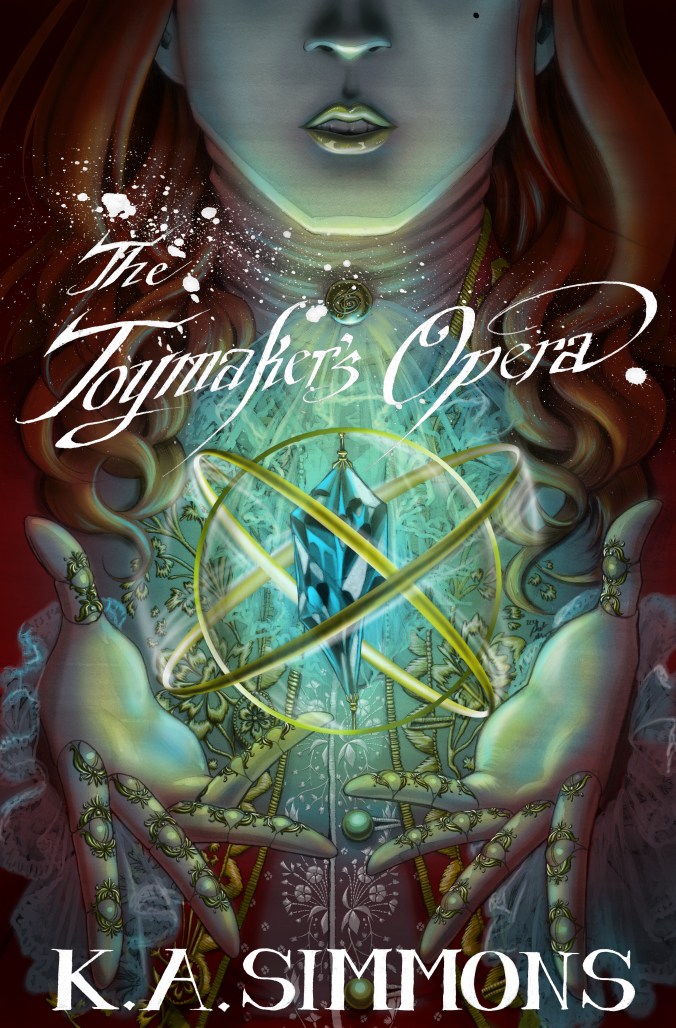
The Toymaker’s Opera
Charity
Moira
True sleep proved elusive. In the dark alcove of her old bedroom Moira tossed and turned. She twisted among the sweat-soaked sheets and cried out in fever. Warm hands–too hot hands–tried to comfort her, but she pushed them away, failing only when exhaustion demanded it.
In her dreams Moira ran. She ran from the Phage through a maze of pitch-black tunnels, passing dead miners and broken lamps. She hurtled through the rough clouds of a storm, running on air along the jagged spines of lightning. It wasn’t always the fog chasing her; a song she did not want to hear snapped at her heels, a song that was magic and madness and command all in one.
Build me a city.
“No!” she cried, sitting bolt-upright in bed.
Arms caught her. “I’ve got you, it’s all right.” A woman’s face swam into view–not Sophia’s–pale like the moon, kinder, perhaps, soft in the places that Sophia was sharp. Her hair, as dark as a raven’s wing, was swept back into a sleeping braid.
Moira cast around, taking in the velvet bed curtains, the sleepily popping fireplace on the western wall. This wasn’t her bedroom. “But I–”
The woman touched Moira’s forehead, brushing a lock of hair out of her eyes. “It’s only a dream,” she murmured. Her movement produced a phosphorous glow of cerulean blue that hurt to look at and took too long to fade. “Go back to sleep.”
“A dream?” Moira asked, uncertain. But even as the question left her lips the room and the woman slipped away, to be replaced by her own bed and Sophia.
Sophia frowned at the wall, cradling Moira in her arms. She rocked gently back and forth, eyes red-rimmed and sagging with fatigue. It didn’t appear as though she had spoken; her lips pressed into a grim line.
“I’m here,” Moira said, or tried to. The moment she drew breath the coughing fit started. An ache deep in her throat that she hadn’t noticed sprang alive, constricting like a lash every time she heaved for air. Moira buried her head in Sophia’s breast, feeling the arms around her tighten. She coughed and coughed, tasting blood and the foul acridness of the coating the Phage had left behind in her lungs.
“Well?” Coleed met Sophia at the door when she was finally coaxed to leave Moira’s side.
The fit had subsided into a deep fever that left Moira unimaginably weak; even opening her eyes seemed like a titanic effort. The others’ voices hummed pleasantly in the background, a reminder that she was not alone. Moira looked up, the shapes in her room distorted, blurry and strange. She saw Sophia silhouetted in the doorway, the straight line of her shoulders bowed to weariness.
Sophia’s eyes, a dull scarlet instead of their normal brown from the recent use of blood magic, flicked across to the bed. “We will know soon enough,” she said, “if she holds through the worst of it, then…”
Then what? But Moira sank back beneath the uneasy blankets of not-sleep and heard nothing more.
This time she dreamed she was the Sheer. The water wheels turned inside her ribs, shuddering along. Rivers roared as they poured into the Tammy, adding to the rumble of the boilers at her hips and the furious maw of the furnaces as they scorched her from the inside out. Moira felt thousands of people moving along her walkways and bridges made of metal bones. She sat, frozen and helpless, as thieves and assassins went about their work. She heard each scream, each echo of musket fire as the nutcrackers brought order, each whispered plea from the dying, the slaves, the desperate, and the unlucky.
A pain she had initially ignored clamored for attention. It reared in her heart, drowning out the small sensations of joy; mothers crooning to their babes, a junior alto receiving her first ovation. The feeling hardly had a name; it seared against her sides, lashing whips of blue at her second sight until she could hardly see; it gnawed on the back of her skull; it threshed, bursting through every fiber of her being until she could not feel the city, could not feel even herself.
It was the song that brought her back, the soaring notes of a violin’s solo, and the urgent whisper of a woman’s voice in her ear.
Moira woke to the sound of rushing rain. She opened her eyes and then immediately wished she hadn’t. The room swirled in a rush of dizzying shapes and colors. She closed them again and felt all over her face with her free hand.
Whatever fever had captured her must have broken, for she sensed no heat on her brow, only a clamminess to her skin where the sweat had dried. Moira pinched her cheeks and slapped herself lightly. The pain arrived, stinging, and faded. She waited, counting the minutes under her breath until she was sure it wasn’t a dream; she could see.
Instead of the joy she had always thought would accompany such a healing, Moira caught herself chewing on her nail beds. She pulled her hand away from her mouth, took a steadying breath, and looked again.
The alcove room was almost as she remembered it from her childhood. A thin straw tick mattress sat in a sturdy wooden frame, the headboard expertly carved by a Verandi craftsman into an image of the Goddess’ nine-pointed sun. Moira drew her finger along the lines, lines smoothed by her own hand. The room, only a few paces across at its largest point, held few decorations. Anything that she might have once kept here had long since been removed to her own apartment.
Even though the room had been sculpted out of inner side of the tower, there was a little natural light seeping in. Moira rose and cast about until she found it; a mirror high up on the wall, reflecting a silver glow from an opening above the doorway. She stared at it for some time, wondering if the mirror had been a new addition. It was not a detail she remembered.
Sight; so suddenly taken after many days of delirious fever in her youth and so abruptly returned after–after…
Moira opened her right hand. She struggled to make out the finer details, her eyes markedly weak after so many years of darkness, but there could be no doubt: the stone was still there.
But that was ridiculous. “It must have been Sophia, she called a healer, surely.” Even to her own ears the words sounded false. What would the point have been, to call a healer now, instead of when she was nine? And more; if Sophia had recruited a healer or medicker physician, that meant Moira’s debt to her–once for turning her luck and again for saving her life–had increased twofold.
Moira’s empty stomach lurched to life, snarling suddenly out of its leaden sleep. She threw her hands in the air. What was the point of wondering when she could just as easily go down the stairs and ask? Moira took a few steps forward, aiming for the blurry bulk of the door, and immediately whacked her shoulder into the wall.
She closed her eyes again–clearly they were not yet to be relied upon–waited until her sense of up and down settled, and felt her way out into the hall.
“Good morning, Sa Moira,” rumbled a man’s deep voice to her left.
“G-Good morning,” she replied, somewhat taken aback. “Whom am I addressing?”
The pungent sweetness of sk’ovi tobacco smoke reached her as the gypsy let out a chuckle that sounded more like the undercurrent of a lion’s roar. “I am Boris, of course. Sophia say we take turns watching you. Today is my turn.”
“Yes, I remember you. Thank you,” Moira added. She risked a peek, making sure to steady herself on the iron railing first.
The experiment proved to be a mistake at once. Moira barely had the opportunity to pick Boris’ figure out from the wall–a mountain of a man more suited to a strong-arm competition than tending a sickbed–before the riot of colors he wore proved to be too much. A jacket of reds hung across his absurdly broad shoulders; carmine, scarlet, claret, rust, apple, and brick; some patches too new–or too faded–for her unaccustomed eyes to make sense of it all. She had a vague impression of a quilted waistcoat underneath in tones of gold and summer’s butter, but quickly retreated into darkness again to save herself from being sick.
“He-ay!” called up the cheerful voice of Coleed, Rashka’s older brother. He must have come into the atrium from the kitchen, looking up at them from the base of the spiral staircase below. “She is awake, eh?”
“Ha,” Boris replied, taking out his tobacco pouch with a hush of leather.
Moira descended the familiar steps without incident, waving off Rashka and Coleed as they came towards her. “I’m fine,” she lied. “Is So–”
“Mon nyara!” A spiral of washed-out crimson proceeded Sophia by mere seconds. The older woman threw her arms around Moira, holding her so tight it seemed she would never let go.
Words–words that Sophia would not give voice–crackled and broke in Moira’s second sight. She saw them, felt the love in the strength of Sophia’s squeeze, the weighted cloak of worry that dragged on her shoulders. But most of all she saw the lines–blazing brightly through the blackness–the stain of recent blood magic on Sophia’s wrists.
Moira bit her lip. She wanted to let go, to let free that last bit of tension in her shoulders and let her Keeper hold her. She ached to give in, to say she had tried and that independence wasn’t worth the hand the Sheer had dealt her.
And yet.
Moira drew away. She drew out of the embrace, disentangling herself from arms that still reached. Moira stood tall and said, all in a rush before she could reconsider, “How much?”
Sophia froze. “What?”
“How much do I owe you?” Moira fought to keep her voice level, to keep things professional. She was grateful, of course, but no longer a child–
Sophia slapped her; the blow landing square across her left cheek.
It hit like lightning, a reeling strike of sudden pain followed immediately by a prickling ache. Moira staggered, catching the railing just in time not to sprawl to the floor. “Sophia, what–”
“Get out,” Sophia spat, venom sharpening each syllable. “How dare you ask me that, after everything I have done for you. You have too much of your mother in you after all–”
Moira regained her balance, cheeks glowing hot. “I do not,” she retorted, sensing rather than seeing that the men had backed a healthy distance away. “Anyone in the Sheer would have asked the same–”
“–spill my blood for you, clothe you, feed you, care for you and for what? ‘Anyone in the Sheer’, indeed! We Verandi–”
Moira raised her voice, yelling to be heard over Sophia’s commanding alto. “Which, in case you failed to notice, I am not!” She gestured, tapping her own pale skin. “I’m not Verandi and I’m not a gypsy and in case you haven’t noticed my ass of a mother left me with a mountain of debt.”
“Pah, your debt!” Sophia snarled. “It is all you ever think about! Do you have a price beside family and love in that ledgerbook of yours?”
“–family I don’t fucking have, Sophia!” They were both screaming now, nearly head to head. “If you had to endure half of what I’ve had to, just to keep living–”
“And damn your foolish pride!” Sophia grabbed her by the arm and marched her straight to the door. One shove from behind saw Moira scampering down the steps to the street.
Cold rain soaked her through at once, so chilling it doused her inner fire and snuffed whatever she had been going to say. “Sophia, wait–”
“No,” the other woman said, flat, in a tone that brokered no argument. “I will collect when the time is right, you can be sure of that. As for the rest–pah!–what I have given you, you stupid, hateful child, has and never has had, a price that could be named by any man. Now get out of my sight.” And with that she slammed the door in Moira’s face, leaving her alone and shivering in the alley.
“I guess that could have gone better,” Moira muttered. She turned and walked away, holding her arms close to her chest for what little warmth they would offer. “But how can Sophia just act like my debt means nothing?” She shook her head in disbelief and then bowed it against the rain, beginning the long trudge back to her apartment.
Of course everything had a price. Sophia ought to know that, at least. That was the law of the Sheer, and of Rimsea if Gray was anything to go by. She ought to have known that that would be among Moira’s first questions, to know if there was some healing hall that might demand yet more money. How was Moira to know that Sophia had meant the care as a gift?
Gift; the word stuck in Moira’s throat. There were no gifts on the Sheer, no charity. Maybe people who hadn’t been born here would never understand. It wasn’t in their blood to know; the selfishness of the nine nameless towers and the unforgiving people who inhabited them. Moira would have to find a way to repay Sophia, to even the scale. Somehow.
At least that answered the question of whether Sophia had hired a healer; clearly she had not, or her anger would not have been so great. That left only two queries. One, when and what would Sophia require for payment, and two, if it hadn’t been a physician who had given Moira back her sight–then what or who had?
Moira deposited the stone on her kitchen counter, glaring at it as if it would suddenly regurgitate the explanation she was looking for. She gave up, going about her chores; making certain that none of the food had spoiled while she was out. Even this little activity proved too much and, after she had hung up her clothes to dry by the roaring woodstove, Moira sank to sit on the floor, a mug of steaming tea in her hands. The fever had left her weaker than she first thought and only an effort of will propelled her into making dinner. All the while the stone sat where she had placed it, unmoving, though she kept turning her head to be sure.
Occasionally old artifacts surfaced in the favors Moira received for reading or in the market stalls around the city. Most times they were useless, like the golem she had sold Jia, or sealed tight. Raw magic was rare. This was not the Citadel, where spells could be woven into pots to keep them from tarnishing or into pipes to keep the water warm. No, the Sheer was a city run by machines and men and the broken pieces of both. It had no use for mages or their eccentric sorceries and so it saw fewer of them.
There was, to Moira, a distinct difference between her readings and the spells that mages cast. Unlike those pretentious wizards she could not raise an invisible barrier to ward off thieves or bottle pure power into aetheric engines and gems. She could not call on the elements; could not twist a ring of fire out of thin air or freeze the surface on a rain barrell in high summer. No, her magic was more instinct than not, the ability to see the truth in people and places and conductive items like her cards. In that way Moira knew her talent was closer to what the Verandi did, who shared enough innate power between them to allow their ships to fly and–she supposed–keep them immune to the Phage.
The difference wasn’t simply that she was using her magic wrong, that she could be a mage if she wanted; use had nothing to do with it. A fire mage might heal a little if he knew the technique well enough. Plenty of people born with magic fell into a niche, especially those cursed with an elemental alignment, yet were able to still craft spells outside their circle of natural familiarity. If one listened to the preachers at temple, at least two schools of philosophy on magic could be heard; that power was pure and it was the person who chose to do good or evil with it, and that some types of magic were inherently of the darkness. Moira, never having gone to temple or school, ascribed to neither side: use, she knew, was only half the puzzle.
Across the earth there roamed hundreds of people, perhaps thousands, with natural magic turning in their blood. That attunement allowed them to create spells from their own reserves and change the world around them in some way, whether great or small, elemental or not.
But not the Sheer. The Sheer had not produced a mage of significant caliber since Lady Setheria, who had floated the Teeth into position after the War of the Flotilla Fortuna, and held them in place by the strength of her will alone until the last bolt was hammered home. Since the war, hundreds of years gone, not a child had been born with talent enough to levitate so much as full-grown man, nevermind several tons of jagged iron. Those who did have a magical gift, like Moira, saw it occur in small ways like her second sight.
Whether due to the frosty nature between their countries or something else entirely, only a few enterprising mages from Merule and the Citadel made their home in the Sheer. Those that did soon left, never staying long, whatever their reasons.
Moira did not read cards that night, nor the night following. When she picked up the Sangrine their golden light frothed between her hands, reeling away from her touch. She set them down, unable to bear looking at them.
Her second sight and her eyes fought over the shape of things. More than once she ran into the wall or banged her elbow on the kitchen counter. The absolute blackness of night, which had never bothered her before, suddenly became a nuisance and blessing all in one. If she wanted to sew then she wanted light, but if she had light then the fanciful prints on the flour sacks made her ill. She wanted to patch holes that she had never noticed in her paper lantern and to polish her shoes. Moira wondered if the world would ever look as it had when she was a child, perfect and in focus, or if she would have to spend the rest of her life half-seeing. There was little point going to a healer when she couldn’t afford one–could never have afforded one, even without the burden of her mother’s debt.
When she finally made the choice to buy candles–to brighten her reading room as well as give her a light to practice her sight by–she prepared for the shopping trip by tying a strip of wool across her eyes. The world shuttered to comfortable darkness once more. Of course it would look silly to anyone who knew her, but she did not trust herself to keep her eyes closed while there were so many new things and people to see.
Superstition ruled in Medtown, and if anyone had seen her leave Sophia’s or noticed her returned sight–which they surely would the moment she opened her eyes and began to track the movements around her–they would doubtless start a wildfire of rumor that she would be unable to put out. People talked and when they did it could add up to a dozen reasons not to visit her, “She’s cursed, touched by her Keeper’s practice.” or “Has her sight again does she? Wonder what the girl had to pay to get it? You know that Gray fellow’s been coming around…”
Moira shut her ears to the jabbering voices in her mind. But the fact remained that she could show no one, not even Tabitha, who was about as native to Medtown as it was possible to be and still have a Wharite accent. Customers would be different, of course, once her cards started to behave. Customers wouldn’t know her or her past, they might even be willing to pay more when she could look them in the eye.
The late evening crowd pressed in on either side of Moira until she was able to slip into the seer’s market, where the path cleared a little. “Beeswax candles, please,” she said to the chandler behind the stall.
He bobbed, his singular, cheery glow of personality doing the same. “Right away, Sa Moira.”
She took the candles, wrapped tightly in their paper, and hurried back towards home. Mist billowed up from far below and water droplets collected on everything. A wetness hung in the air, more than usual for a winter day, and the wind’s sting nipped but did not bite. Spring stirred, but, as with all things on the Sheer, it was hard to muster life from within a cage of rock and steel.
Against her will she slowed by Tabitha’s stall. Oh, how much she simply wanted to talk to someone–really talk–and not just the polite fiction put up by the paid whores in Philandry. The candles were an excuse and Moira knew it, an excuse not to think about the stone. An excuse not to get the answers she needed. The sooner she got home the sooner she would have to face it.
Moira gave in. “Good evening, Tabby.”
Tabitha bustled out from behind the cloth partition where she kept most of her back stock. “Moira! Good to see thee,” she paused, having noticed the wool across Moira’s eyes. “Hast tha been well?”
“Quite, thank you. How’s your wife?”
“O, she’s well enough. Somethin’ wrong?”
Moira caught her hands just in time. They did not rise to touch the wool. “My, um, second sight has been a bit off lately, uh,” she said, stumbled over a lie that she hadn’t prepared. “Must’ve had some bad food.”
Tabitha made a soft noise, halfway between sympathy and disbelief. “An’ it helps, Ah wager?”
Under the wool Moira could feel the blush starting. Muses, she must look like a idiot. “It…helps me keep my balance.” Which was true, only for the opposite reason.
“As tha wilt.” Tabitha shrugged.
Moira hurried on to a different topic. “Anything good happen while–since last we met?” she asked, inexpertly dodging any indication that she’d been at Sophia’s or sick with Phage poisoning. If anything was more unlucky than death it would be running straight through that killing fog and living to tell the tale. That, too, was another question Moira was not certain she even wanted the answer to. Why was she alive when she should so clearly be dead?
Tabitha, always one for gossip, launched immediately into a grisly-detailed account of some stupid beggar running headlong into the Baron and shouting at him like some drunken fool. “An’ then she called ‘im–guess what?”
Moira wanted to die. She wanted to curl up and die on the spot. The mortification choked her until all she could manage was, “I dunno, what?” in a very small, pinched voice.
Thoroughly enjoying herself, Tabitha told the whole story, repeating the entire ridiculous phrase Moira had spouted word for word. And if that wasn’t bad enough, when Tabitha recited it several other of the nearby shopkeepers chimed in, all bursting out into raucous laughter afterwards.
“Did–didn’t anything else happen?” Moira asked. “Surely the Baron’s not the only source of news in this town.”
Tabitha wiped her eyes. “Goodness me, oh my. Ha, Ah’d love ta meet the gel what thought she could face down d’Bardi. What a sight ta see. Aye, summat else did happen now tha mention it.”
“Oh! Do tell!”
“Well,” Tabitha hesitated, “it’s not as funny.”
Moira could have shaken her. “I’m all about the drama, Tabby,” she said, smiling in what she hoped was a winning way.
“There’s that famous alto, tha knows.”
Moira cocked her head. There were several famous altos, not as many as sopranos, of course. Something knocked on the back of Moira’s mind; the image of a young alto on stage at the Il Susurrus opera house, golden-haired and sparkling in her slim understudy’s gown. And beside her, in the wings, the crumpled body of an older woman. The woman had a face that Moira knew without knowing, recognized without ever having seen the singer in person. “Do you mean…Sonora Emilandia?”
“That’s the one. She died durin’ her last show. Serenadin’ away on the last aria of Il Ardeo’s first act and just pop! Went over sideways like a sack o’ stones.”
The roar of a crowd she had never heard filled Moira’s ears. She leaned on the stall, willing herself to listen closely to the rest of the tale, as though she didn’t know how it all ended, as though it was not already a part of her.
“Poison most like,” Tabitha continued, “more fancy, less mess. Scandal’s still goin’ on, too. She ‘ad several lovers, all jealous fellas an’ a few missus–an’ get this–each of ‘em confessed ta the crime! Newspaper’s been all over the place, too. All them lads and lasses are feudin’ like crazy, all sayin’ it was them what did it. Meanwise the managers of the opera house are fixin’ to find who did it for real, so’s they can figure out which of ‘em they want to sue.”
“Ah. Look, I’ve got to be getting on. Lighting the lamp and all that—”
“—and they say the Baron’s been down to Wrightsward.”
Moira’s foot hung in the air. She didn’t know about this. “Oh?”
“No clue what for, but he’s been down over Augusti’s way,” Tabitha said, really warming to her subject now. “Him and all his nutcracker boys. Practically swarmin’ the place from what Ah’ve heard.”
Moira nodded and made her escape as quickly and politely as possible. The last thing she wanted to do was to hear more about the Baron. She’d had enough of him to last a lifetime, thank you very much.
There were a hundred, thousand stories about Octavian d’Bardi, each one more outlandish than the last. No matter how many times a tall tale was told, how often the fundamental details stretched or changed, the stories all agreed on two key points: the Baron loved innovative, impressive music and had a temper to match.
He wrote music–no, more than that–he composed every detail to do with his music. Ballet choreography, set design, costume construction, peculiar vibratos; nothing seemed beyond his reach to command. Aside from the ridiculous operas he wrote solely for outdated instruments–key fiddles, glass harps, hurdy gurdies–and the entire series of librettos conceived specifically for kulning, the Baron had been known to storm into the Il Susurrus opera house at all hours of the day and night, demanding that the version everyone had been practicing was wretched and had to be revised at once.
“The ballet needs to be changed, it’s all wrong, dammit, no, I don’t care that I approved of it just last week, that was a week ago and now it’s all got to be scrapped and here’s the new sheet music, yes, I realize it’s in ⅞ time, how is that a problem? You’re all artists here, aren’t you? Surely you can manage playing in ⅞ time, it’s just onetwothree-onetwo-onetwo, onetwothree-onetwo-onetwo, yes, you see? Simple. Oh, naturally the choreography will have to be changed, it’ll all have to be changed but surely you can manage, you’ve got a good two weeks until opening, you’ve all the time in the world to learn it over, the dance and the music and, you see, I’ve already got the piece memorized and I only just composed it tonight, it’s such a simple piece, more of a ditty, really, so I trust there won’t be any trouble at all.” Moira rushed through the familiar words under her breath, repeating them as Tabitha had repeated hers. Stories about the Baron tended to stick around, whether one wanted them to or not.
And that opera–Nero Mons–had not been the last whose development he had brought to a standstill. The Baron had even been known to stop a show on opening night by shouting down from his box so that the trapped audience was forced to witness his relentless instruction as he sought to correct some hereto-unseen flaw before the company could proceed.
But Wrightsward was the makers’ district. It was strange that d’Bardi would deal so personally with a craftsman, but his behavior was not much odder than how he treated the folk at the opera house. Doubtless he was having something made on commision that had to be just so or, well, Muses help the man who failed the Baron.
Moira tugged the wool farther down over her eyes and made her way by memory through the streets. At least d’Bardi had never seen fit to visit a seer or medium, which, odd by itself in a city that relied upon the guidance of the men and women of Medtown, was not actually out of the ordinary for a man who considered sopranos to be more important than senators.
The old Baron Marquette, now he was a man who had cared for the city, at least in his own way. It was he who had made the firecats and the lampkillers, the divers who held open the locks and the liftmen who never took you where you wanted to go. All of his contributions to the Sheer seemed to be perilous automaton creatures, half-machine and half-magic, and no one but Jacques Augusti could tell which half was which enough to fix them. Perhaps d’Bardi needed one of Marquette’s faceless contraptions repaired–or a new one made. Moira shuddered. As if the Sheer needed any additional horrors; the nutcrackers and the Phage were more than enough.
Her thoughts turned again to the stone, brought there by the memory of her long flight up to Medtown. Things did not often have magic though it was not entirely unheard of. Her cards had a presence and energy all their own; curling golden dust that allowed her to touch and mold it into the shape of the future. But whether the cards had started out that way or whether the magic had slowly collected in them over the course of time was not a question Moira knew the answer to.
Some objects began their life with no power at all, like a child’s favorite toy or like the nutcrackers who marched through the streets, yet would end up imprinted upon by their owner. Moira remembered all too clearly the stain the Baron had left on the nutcrackers, the magical afterglow of the power he commanded over them. An object–any object–might be lifted in that manner to bear the shadow of its owner.
And then there was mikkary. Mikkary was the way that places–rather than items–consumed the sympathy of emotions and power. Mikkary grew, cancerous and ever-hungry, not despair and not malcontent, but so close that there was no other word for it. It swelled in places like the Faid Faran, those narrow lanes collecting the settling ash of death until even when the furnaces stood cold and silent one could feel eyes and hands reaching out, could sense the presence of many bodies crowding close on an empty street. It hovered just off the stage at the Il Susurrus opera house, turning what should be comfortable darkness into a sucking maw that devoured love and spirit and song, and refused to be satisfied. For all its dangers, for all the weight and pressure of hopeless distress mikkary could place upon a person, it was still made, albeit unintentionally.
Raw magic however–completely raw–untouched and unshaped by mankind, was the rarest of all.
Moira sat at her reading table, rolling the stone between her fingers. Whether it was the stone that had healed her sight or whether it had been something of Sophia’s doing no longer mattered quite as much. The vision of Sonora Emilandia’s death loomed just beyond her reach; the tactile memory of the thundering applause, the heat of the lamps at the edge of the stage. Even now, as she fought to feel the table under her hands and the hard back of her own chair, she could still hear the far-off melody of a violin’s song.
Something more than a healing had taken place at Hector’s. Something that had kept her alive throughout her mad dash to Sophia’s. Something to tip the scales, but in what direction and for what purpose?
Moira tried to count the minutes but could not. Under the thick swath of protective wool there was no light to tell her whether it was noon or midnight. At last she rose and swept back into the kitchen.
Sight, in the Sheer, meant a lot of things. It meant safety and security. Moira knew she shouldn’t question such fortune, no matter the cost, but it was not knowing the true price that frightened her. There was only one place she’d ever felt power like that before…one place that could possibly hold the answers to not just how but what.
Moira set the stone down. There was nothing for it. She had to see the Crossroads Clock.
~~~
Loving it? Hating it? Questions? Leave your feedback in the comments below! I can’t wait to hear from you. Please consider supporting me on Patreon so I can post more often.

Mass Effect Voyager
Bookmarks are rolling in!
Hey all,
For my $5 level patrons on Patreon I am commissioning a set of 3 bookmarks that they will receive when each book of mine is published.
Just wanted to let you know that I have begun to prepare for Toymaker’s publication by getting the bookmark reward for you guys all up and running! The bookmarks will look almost like tarot cards, appropriate for the themes of the story, I’d say. 🙂
Moira’s bookmark is finished and I’ll be ordering test copies later today. The Baron’s is in the works and the toymaker’s hasn’t been started yet. They look AMAZING so far!
This is the perfect time to sign up to be a Patron, since you’ll get to see all the behind the scenes work, extra chapters, and a preview of the bookmarks early! Even $1 or $5 helps a whole lot!
Enjoy Chapter 11!
Kim
The Toymaker’s Opera: Chapter 11 – Vanity’s Errand
Moira’s luck turns, but not the way she expected. The working title for this chapter was “Moira Puts Her Foot In It”, which seemed accurate at the time.
If you like this you can support me on Patreon.
The Toymaker’s Opera is an alternative-world steampunk adventure. It is a story about a poor fortuneteller, a living automaton, a mad Baron, and a city that dreams. It is a story about the price of friendship and happiness, about legacy and talent, blood and luck. But most of all, it is a story about the things that have no price.

The Toymaker’s Opera
Vanity’s Errand
Moira
Steam rose heady and thick from the water. Moira took a deep breath and plunged under. For a long, glorious moment she was encased in sweet, sweet warmth. She rose with a gasp and shook her hair out. Slick droplets cascaded down her skin. It felt so good to be clean, really clean, at last.
“I just don’t understand,” Moira said, finishing the story she’d started earlier. “If my…fortune has really turned–and getting paid by the nob from Wrightsward certainly felt like it–then why did everything go so wrong in the Shade?” She turned in the bathtub–an enormous, claw-footed thing–toward the whore she’d hired, listening for a response.
Despite the obscene price Gray was now demanding of her Moira couldn’t let herself withdraw her appointment in Philandry. She wouldn’t give back any of the food or supplies she’d bought, and she refused to let Gray’s intimidation barr her from the nice things she’d told herself she was going to get. If one didn’t live a little now and then, what was the point? There was no sense being poor and miserable.
Philandry was the companions’ district. There were no guilds allowed in the Sheer; nothing that would give leeway for bargaining power against the Reach, but the prostitutes and lovers-for-hire were a force to be reckoned with. Philandry was twice as large as Medtown, taking up more space than even Wrightsward and Copperlight, and had all the importance due to such a district.
The whores who chose that line of work came in every shape and size. There were fat Yuan men who served cups of steaming tea, lithe young boys ushered to and from their patrons under the watchful eye of a master as stern and protective as a mother goose, and voluptuous Ombolan women who made an elaborate ceremony of consuming a small banquet before taking off so much as a stitch of clothing. Thin, awkward girls learned the art of shyness, well-muscled Toulene warriors and laughing Verandi women made dance and art and sex into one and the same, old soldiers missing limbs and pieces of their hearts told tall tales long into the night, and a precious few who studied and smiled and turned clients into friends left their draped boudoirs nightly for the gilded estates above the Teeth. Even a few Rimseans made their home and their work in Philandry, performing long, secret rituals with others of their race that no outsider was allowed to see.
Regardless of their gender or ethnicity or age, any worker in Philandry had the right to refuse any patron at any time for any reason. The customer who did not listen to the request to leave, or was not of a mind to, soon found himself being flung face-down on the grating just beyond the district’s border and barred from re-entry. Unlike Medtown, in which each seer had to fend for herself, the citizens of Philandry pooled for tithe and bouncers together, paying both at least a month in advance. It was no paradise; plenty of the men and women went hungry when they couldn’t entice in enough business, gossip and disease ran rampant–though neither worse than the other, and not every madam or pimp could be said to be kind; but thankfully it was a better place than most, at least there were more broken hearts than broken arms, and that was something to be happy for.
Many folk visited Philandry. Some went for sex, some for pleasure. More than a handful came to breed; usually Verandi women who could not have children with their otherwise infertile partners. A few went to observe the rites and trappings necessary to pass into adulthood or to honor the culture of their homeland. Some visited friends, sharing drinks and stories over dinner, some to make them. Others asked for advice and conversation, like Moira was doing now.
The whore who rose and swept across the room was a Sulisine lad, tall and lissome, with a long waterfall of hair that felt like ink when Moira touched it. His skin had a strange texture, both rough and smooth, as though he had fish scales running up and down his limbs just under the surface. They were a sea people by nature, long interbred with the locals on whatever coast they inhabited. Gentle, webbed fingers caressed Moira’s skull, easing out the lingering tension there and working shampoo into her hair.
He was quiet for a long time, as his people were wont to be. Moira had chosen him more for a need to be bathed than anything else and to have somebody to talk to; since she refused to admit outright to anybody in Medtown that she had gone to see Sophia in the first place.
“Have you considered, perhaps, that it is because you have not yet paid your Keeper?” the lad said, the suggestion cutting deep.
Moira winced inwardly and spent the rest of her visit chewing this over. She paid and tipped, as was proper, and went out into the street again feeling fresh but worried. It wasn’t that she was avoiding Sophia, but that her Keeper had not yet requested a price for her services. What Sophia would want, however, was beyond Moira’s power to guess. There was little she could offer a blood witch.
“I won’t have her doing me any favors,” Moira griped, “if she thinks she’s being helpful by waiting.” That had to be it. Sophia must be holding off on charging her, conscious of Moira’s money troubles. Moira resolved to have none of it. After all, the debt to her Keeper must now come first, and Gray be damned. Perhaps then the spell would take hold and the wheel would turn and she would be able to pay faster than the rate of interest, even if it did take years.
In this mind Moira made her way down the back alleys and twisting staircases to the Pride at the bottom of the city. She toiled over Gray’s parting words, on one level muttering curses on him and all his kin, while on another she resolved to pay him fairly. “As if he’s worth so much money,” she scoffed, setting off another circle of inner debate.
Undecided still, Moira stepped down from the broad stones of the Harvest Stair and onto the wide, cobbled street that led directly to the Pride. If she were to turn right and walk the length of a tower and a half she would soon find herself at Mercy’s Hall. North along the outskirts of the cliff would take her to Skyman’s Wharf where the airships and flotillas came in, their captains sending goods along the boulevard by cart and wagon, past the gilded bathhouse of Troi Matabla, south to the Pride.
The market of the Pride sat on the lowest level of the Sheer. Instead of clinging directly to the side of the cliff face it sat inside the tower itself, the middle tower of the outer three. Two great archways at either end ushered shoppers into the plaza, leaving the market itself open to the air. Once inside the ceiling stretched up into darkness, the sweeping sides of the walls coming to a fine keystone point. It was far from dark, however, as several rows of stained glass windows high along the eastern wall let in more than enough light. On the western facade an enterprising engineer had at some point affixed several beaten sheets of polished tin angled towards the ground. These caught the refracted corals, golds, cobalt blues and deep sea greens from the stained glass and threw them down upon the market in long stretches of color. The cloth tapestries hanging from cables flapped gently in the breeze, not advertising Guilds as they might do in any other city, but businesses.
Both sides of the plaza, western and eastern, boasted fine shops; tailors, wig sellers, cobblers, and jewelers. Wrightsward was where things were made but the Pride was where they were sold. Many districts had their own shops, usually grocers and those folk who specialized in whatever items locals usually bought; like Tabitha, who always had a hefty spread of smudges for the discerning seer. Plenty of folk who created their goods farther up the city chose to advertise or keep a booth in the Pride, which generally saw more foot traffic.
Down the middle of the market plaza stood rows upon rows of tented stalls, rickety wooden booths and permanent ones, food stands from which emanated the crackling of frying oil and the piquant smell of exotic spices; young apprentices darted between the crowd, drumming up business. The market was never quiet, and the noise once inside the tower was nothing less than a dull roar.
Moira generally did not visit the Pride, except when absolutely necessary. The grocer’s market in Patchwork was usually sufficient for her needs and anything else she might be lacking could easily be sourced from nearby. Not only that but the press of people made it far easier for thieves to do their work. Moira smiled a little, secure in the knowledge that her last few coins for the day were hidden too deep to be stolen.
A new stone, perhaps another quartz, was on her shopping list today. She needed something that would counteract the denseness of the malachite that she already had, anything to give her more difficult readings a boost. Another amplifying stones wasn’t necessary of course, she could read just fine without it. Soon, too, she would have to make a decision about Gray’s offer; whether to bow her head and take it or try to fight for something more reasonable. Either way the days ahead looked lean even though the weather was warmer. The least she could do was treat herself now, while she still had the funds to be able to do so, thereby making the long slog towards freedom that much more bearable.
Thus satisfied, Moria ducked into stall after stall, searching for the perfect stone. She didn’t press herself against the cases or ask many questions of the staff. In each gem shop she drifted the length of the tent, hands out and open, her second sight watching for the curl of–not magic, but a ‘rightness’ that would tell her she’d found the perfect stone. It was like trying to complete a puzzle without the rest of the pieces.
More than once she slapped away the brushing fingers of a thief, not bothering to turn and confront them. “Oh, off with you!” she sighed as yet another child made the attempt toward her side pocket.
“Wasn’t doin’ nuthin’, miss,” mumbled a boy so young his voice still had the clear timbre of a soprano.
She ignored him and ducked inside the last stall along the eastern edge. Moira reeled back at once, pushed to the side by the hard, gloved hand of a nutcracker. Just in time she caught her footing and managed to stay upright.
“Oh, I do beg your pardon,” the man behind the nutcracker drawled, not sounding sorry at all. His voice, sharp and as cutting as the crack of a whip, equally matched the icy spears of scarlet that came showering down in her second sight when he moved closer. “I should think that even the scum of the Warren would have greater manners–along with greater sense–than to go blundering about into their betters.”
Any shock at the sudden push disappeared in an instant. Moira squared her shoulders and shook her finger at the stranger. All the rage and teeth-gnashing Gray’s ridiculous scheme induced came pouring out of her before she could stop it. “Listen here you pompous, imbecilic, chord-fretting, overgrown, overpowdered narcissist: I have had it up to here with men like you! Ha, betters indeed! What right have you got to go shoving folk around? Surely a woman of my station has more right to the Pride than an officious ninny-dandy like you! And I wouldn’t have run into you anyhow,” she added, so full of venom she could spit. “So you may take your stupid errands back above the Teeth, where you belong, if you so hate to mingle with us lower folk. What?” she continued, only marginally away of a growing silence around her, “afraid to sully the gloves mama bought you–”
The slap hit the side of her face with all the force of a cane. Moira crumpled underneath it, her cry cut off. She sank to the stone, surprised to find that the earth was not also spinning beneath her. Numb cold lasted only a second before hot pain blossomed. She brought her hand away, unable to tell through the trembling if she had bit her lip and drawn blood. Regardless, that cheek would bruise, a more-than-lovely sight for her next customer.
Dimly, overhead, she heard the lordling say, “May that teach you a lesson in humility. Count yourself lucky I am in fair spirits today, or we would soon see how silent you could be, if you had buttons for eyes and wood for teeth. Men, get this detritus out of my sight.” With that Baron d’Bardi strode past her, allowing his nutcrackers to seize her and throw her aside.
Moira fell hard. Her clean hands scraped over rough edges on the rock, nails digging into the grime and dirt between the ridges of stone. Gradually the hubbub of the crowd’s normal activity returned, people moving swiftly around her without stopping. Wincing at a new pain in her side and holding her stinging arms gingerly, Moira staggered to her feet and tried to wipe the muck from her dress.
Hot tears spilled down her face, making tracks through the soot. The whole left side of her head ached, and a terrible throbbing had begun. Dazed and exhausted she trudged through the market, now and again wiping away the tears that leaked out. Moira bit her lip and refused to keen, trying to hold it in until she could lock her front door on the world.
“Sa Moira!” a familiar voice greeted her at the next stall. “I haven’t seen you in–oh my.”
“Oh my is right, Hector.” Moira felt her way forward under the hanging curtains and rested gratefully on the offered stool. The last few shops had laughed her right out, one had even told her that she could incur the wrath of the Baron elsewhere and sent her away. So much for getting herself a gift. Moira doubted now whether a new stone would even make enough of a difference to matter. Tentatively she touched her left ear again. It was still burning hot. “Maybe I should just go home.”
Hector, an Ombolan merchant with a bass as robust as his body, patted her shoulder with surprising gentleness. “Nonsense, Moira!” he boomed. Hector was always booming; his enormous belly jiggling from some joke or calling customers in from six stalls away. He had a smile to match, Moira remembered from her childhood, perfect white teeth on an ink-black canvas.
“What you need is a good cheering up, my girl. No more of this dreary face, no more!” Hector cried, clapping his huge hands together. “Any more of that and I shall have to find a cure to sadness itself and then–huzzah!–I would be the richest man in the Sheer and then where would you be?”
Unlike the men and women who worked in Philandry Moira had no friends with which to share stories over coffee or tea. She had only her customers, who were much too busy telling her their stories, and the people who owned the shops she frequented. The lack of companionship had never bothered her before–she was a solitary creature by nature, if a stubborn one at that–but now she wished more than anything for a sympathetic ear. Tabitha was too wrapped up in the laws of Medtown to be an impartial judge, Mrs. Marshall was better suited to the homey farm life she and her husband had left behind in Elleswhar than a tough one in the Sheer, and Sophia was as likely to tell Moira she had brought it on herself as she was to smother her former apprentice with motherly attention.
Nonetheless, Hector’s roaring good humor continued unabated and after a while Moira found herself smiling. “Aha!” he laughed, having brought her behind the counter while his attendants served the other customers. “So you do have a lick of cheer left: I thought so!”
“Only you,” Moira replied dryly, but he seemed not to notice. As far as she could tell there was no stopping the man. Hector was a force unto himself. “You’d sell your own apprentice to himself if you thought you could get away with it.”
He snorted. “And I’d turn a damn fine profit off it, too. What can I get you? If I know my Moira she doesn’t come to the Pride for just anything.”
Years of loyal patronage proved him right and Moira explained the type of stone she’d been searching for. “Something to see, to help amplify my readings and…make clear the path. Sorry,” she said, pinching the bridge of her nose. A headache was coming on. “I know it doesn’t make much sense.”
Hector rumbled in understanding, like the purr of some giant cat or the far-off roll of thunder. “I’m more than used to you Medtown folk, coming down here all bug-eyed in the daylight and crooning on about whether the stars are aligned well enough to actually buy anything.” Drawers and cupboards slammed as he rummaged through them. Packing paper rustled.
Moira turned her head to catch a soft breeze that billowed through the tent. Sitting there, in the middle of the market, it was hard to hear anything beyond her immediate vicinity. Next door someone complained loudly about the recent losses in ivory stock, the thriftiness of the Verandi flotillas, the exorbitant cost of shipping anything by sea. It almost, but not quite, drowned out a strange droning noise that shifted in and out of hearing, so that Moira wasn’t sure she was hearing it at all.
“What you need–what you really need,” Hector half-muttered as he banged through drawers and cursed his assistants, “is this!”
She paused just long enough and then tapped the right side of her face, twisting her mouth into an aching grin. “Blind, remember?” The joke felt flat but he laughed anyway.
“Ha! You know your way around the city better than any blind person I’ve ever met. But very well.” Hector cleared his throat and resumed a theatrical air. “What I have for you today, young lady, is an item so rare, so beautiful, and so obscenely rich in its design that any sane man would ransom off a flotilla and a soprano just to be able to afford it. But for you, my Moira, for my dearest customer I shall offer this lovely, perfect blue stone for just the simple price of–”
“Hector.” Moira stood, shaking her hands out. The stinging of raw skin had passed, leaving only a dull ache. “Let me hold it a moment before you go naming prices.”
“–one srir and twenty sams,” he finished. Then, with the exquisite care known only by the largest of men, Hector leaned forward and placed the stone in her palm.
In the split second it took the stone to fall from his fingers to hers, Moira saw a stain of glowing blue where the gem should be; a phosphorescent star of raw magic. She tried to jerk her hand back but too late. The stone hit her palm, heavier than its size. Moira waited, frozen.
Though large for a gem–at least an inch across–the stone nestled neatly in the hollow of her hand. It was uncut and had not been polished; unusual for anything that was normally sold in the Pride. Instead of the shock of magic that she had been expecting or the the fading warmth from Hector’s hand on it, the stone gave off a frosty cold that burned. It was not harming her–though it was hard to tell with anything sorcerous in nature–and the bright cerulean was steadily leeching out of the thing and running all over her hand and down her arm.
“What…is it?” she asked, and then shook her head to clear it. That sound–the droning–was louder now.
Hector chuckled, but not quite as heartily as before. “Oh, the Verandi used to mine them on the southern peninsula. That was before your time and mine, before the War of the Flotilla Fortuna. The gems used to be all over the Sheer, still find them in some of the old Baron’s machines, too. But the Reach won’t buy them anymore and when I can’t rightly call it sapphire, nobody wants much of anything to do with them.”
Moira felt queer; numb, as if she had been walking for hours against a northern wind. Her hand closed around the stone, though she was not conscious of the motion.
“Well?” Hector asked after a long minute of silence. “Is it what you need?”
“I’m not certain…” In truth Moira wanted nothing more than to give the stone back to him, to shove it into his hands and walk as fast as she dared for home. Something about it seemed off, a minor note in an otherwise major concerto.
But the stone did not want to be given back, for all Moira could tell. She could not make her fingers release it.
“I’ll take it,” she said, holding it as far away from her body as possible.
Hector did not immediately reply, distracted no doubt by something he could see and she could not.
Moira’s second sight consumed her entire attention. The blue stain, which had begun by running over her hand and down her arm like water, now raced up her bicep and shoulder at an alarming rate. A frigid wave, far colder than the sea in her dream, came frothing on the heels of that cerulean light. It spread from her fingertips to her neck, a burning like ice. Moira gasped as the feeling invaded her skull, flowing over her aching cheek and settling behind her eyes.
She swayed, everything suddenly blue and bright and tinged with frost. Second sight gone–completely overtaken–her one free hand felt very far away as it cast around for support. Whatever balance she had had vanished and Moira blundered to the side, turning over a rack of shawls that fell around her like soft rain.
“–speak, Moira, whatever is the matter–” she heard Hector saying.
Her mouth would not answer. Words refused to come. “Just…just let me pay you,” Moira managed through gritted teeth. If she could only get back to Medtown. The last thing Moira wanted to do was throw Hector’s stone to the ground, incurring further bad luck and insulting him in the same turn.
“My dear, you are not well. Rest here a while.” His gentle hands touched her and she reared away, the gesture more unexpected than unwelcome.
Every inch of her body was on fire, searing layer upon layer of stinging ice. Meanwhile, as Moira struggled to extricate the two srir out of her bodice with hands leadened by cold, the blue grew brighter and brighter in her vision. Any minute now it would burst.
“Take it,” she said, thrusting the coins in front of her.
“Moira–”
“Just take it!” she cried. Unable to tell his direction Moira made her guess and fumbled. She missed Hector’s hand by a hair and the coins went spilling down.
One of Hector’s apprentices burst through the flap of the sales tent from the plaza outside. “Master! Master, we’ve got to go!”
The coins and the blue and the Phage hit all at once. A solarflare wreathed in frost exploded inside Moira’s mind. It consumed all senses, sending her careening into the cloth wall of the tent. The sound of silver on stone and the wrenching wail of iron cried out in the same breath.
Rough, thin hands grabbed Moira’s shoulders and flung her out of the tent and into frenzied foot traffic. The droning had finally reached its familiar fever pitch, jumping up the register too quick.
People rushed by, shoving Moira aside. She fought for balance; no sooner having found it than to lose it again. Men and women ran, scattering before the Phage. They pounded up the steps to nearby shops along the wall, screaming when they couldn’t get in. The mob began to seethe, pulling in different directions, hauling Moira along with it.
A scarf, still clinging to her shoulder, slipped and fell on the ground. Moira scooped it up and held the thick fabric to her face. Nothing, she could see nothing, except a roiling, all-consuming indigo light, with dark shapes moving within it.
Moira closed her eyes and began to run, one hand holding the stone and scarf to her mouth and the other held out in front, finding the way. A man stumbled into her, already thick with Phage and dying of it. He crashed into her elbow and fell, each breath rattling in his throat. Moira rushed on and did not turn back.
Balance returned. Long, quick strides carried her across the plaza, toward the southwestern edge. Moira tried not to gasp, not to fill her lungs with poison. She panted, despite all her efforts, and tasted the queer copper bite of the Phage.
Moira prayed as she ran, ducking under a small half door along the western wall of the Pride and setting her foot on the bottom step of the Crimson Stair. She prayed for minutes, knowing she had only seconds.
The Crimson Stair was an ancient thing, one of the first of its kind. Like the old bridges between the districts it connected the Pride with the next level, Evenrhyme. That district had been destroyed in the War, however, and now the Crimson Stair went up and up, cutting through all that empty space. Eventually, after switchbacking through a score of lesser quarters and bypassing the Tammy completely, the Crimson Stair poured out into Wrightsward. From there it was only half a block left, up the shorter and more sedate Brigid’s Stair, and half a block right to her own front door.
Moira wheezed as the high steps and the incline began to take their toll. She coughed, trying to catch her breath, any moment expecting to feel a thickness in her lungs. Pure fear replaced the numbness that had come before. It didn’t take long to die of the Phage.
The close tunnel she had been following stopped abruptly as the stair kept going, protruding out of the back of the tower and continuing over open air. Down below and up above Moira could hear the hissing of the killing fog as it issued out of every grating and vent in the city. The sound echoed, trailing itself in a never-ending susurration. Like a giant serpent, ready to spring.
Moira felt the curve of the stair just in time, narrowly avoiding a tumble over the open sides. There was no railing to protect her. Sweat already soaked the scarf through. Wind assailed her from either direction, teasing and pulling her towards the edge.
Her mouth thinned to a grim line and she wheeled to the side, flying around the turn and up, up towards Medtown.
First Gray, then tithe, Sophia, the Baron, and now this damned stone. Moira put her head down and ran flat out with all her might. If none of those things had killed her, if she had any fire left in her breast, she would live, dammit.
No sooner had Moira crested the last step of the final stair and crossed into Medtown than the second wave of burning cold crashed down upon her. She faltered, tripping over her own two feet; feet that she could barely feel.
Instead of making for her own apartment Moira turned left, toward the closer haven of Sophia’s. She stumbled into the side of the middle tower and jogged along it, hardly able to breathe through the stitch in her side.
“Soph–Sophia!” she called, gasping. Her own voice sounded distorted and strange in the fog.
Moira felt her way along the wall, slowing without meaning to. An ache she could not get rid of clutched at her chest, drawing each breath out painfully. She heaved and heaved, panic seizing tired limbs.
Just a little farther. Only a few more steps.
Hands caught her before she fell. Not the wooden, gloved hands of nutcracker men but the broad, callused hands of Verandi sailors.
“Is okay,” Rashka purred in his thick baritone, “you safe now.”
Moira let herself be carried inside. She only needed one touch–Sophia’s scarred fingers brushing against her brow–to know that she was safe.
“I ran…all the way…” Moira tried to say. “The Phage–”
Sophia covered her lips. “Not now, mon nyara. Coleed, Boris; get her to bed. Rashka, lock the door,” she barked, and a moment later the wood slammed home, locking out the Phage.
Moira felt herself slipping away. Horror gripped her: someone had to know. She made another attempt, reaching up to claw feebly at the men carrying her. “The stone, please, take–” Her voice broke into winded coughing and she could manage no more.
One of the men patted the back of her hand. “Is right here,” he assured her, “no worry now, yah?”
“B-But…”
“Quiet,” rumbled Boris, the larger of the two. “Sophia say.” Moira didn’t have the strength to argue.
They laid her on her old bed and drew the covers over her. One by one they left, Coleed last. He brushed her sweat-soaked hair out of her eyes and murmured reassurances that Sophia would be up in a moment, ready to heal whatever ills her lungs had sustained from the Phage. Moira reached to catch his arm as he left, but with no success.
When he was gone Moira opened her streaming, aching eyes to a whirl of color. There, clutched in her palm, dulled now but still beautiful, sat the stone.
~~~
Loving it? Hating it? Questions? Leave your feedback in the comments below! I can’t wait to hear from you. Please consider supporting me on Patreon so I can post more often.
The Toymaker’s Opera: Chapter 10 – Sisters of Sun and Shadow
In which Moira tries to settle her debt with Gray.
If you like this you can support me on Patreon.
The Toymaker’s Opera is an alternative-world steampunk adventure. It is a story about a poor fortuneteller, a living automaton, a mad Baron, and a city that dreams. It is a story about the price of friendship and happiness, about legacy and talent, blood and luck. But most of all, it is a story about the things that have no price.

The Toymaker’s Opera
Sisters of Sun and Shadow
Moira
Frigid salt water crested the railing and crashed over Moira. The solidness of the wave broke upon her back, a moment of near-drowning, and then the rivulets were running down her arms and face, plastering her hair against unseeing eyes. Wind drove at her from every angle, sending stinging raindrops like musketfire against her skin. She splayed her feet for as much purchase as she could get on the slick wooden deck and hauled hard on the oar between her hands.
Though numbed through with cold and sea spray Moira could still feel the blooming ache between her shoulderblades and along her arms with each sweep of the oar. How many hours had gone by since the storm began she had no way to know. It might have been an afternoon gale or a full-scale typhoon; there was no way to measure time except the distant beating of the ship’s drum.
She couldn’t see the men on either side of her, either, could barely feel them at all. The only indication Moira had that she was not alone was the constant heavy jaw of the iron shackles on her bleeding wrists, snapping taut as she rowed.
Lightning crashed overhead, so bright and close that another slave cried out, though he should have saved his breath. Thunder followed almost at once, so loud it was as if a cannon had gone off right in her ear. Moira winced, for a moment able to hear nothing but a dull ringing. Then the sea and the sound of it came rushing back, and another wave smashed against the deck, this one hitting her full in the face. She staggered, footing swept out from under her.
The Rimsean slave master cracked his whip overhead, a threat readily heeded. Moira pushed and pulled in time with her fellows, desperate not to call attention to herself. Under her hands, now rough calloused and strong, the solid wood of the oar moved in great sweeping strokes, propelling the tiny galley up one giant swell and down the steep slope of another.
Despite the howl of the storm and the heartbeat of the drum, another sound cut through the booming roar of the sea. It started as a low hum, in her teeth, working its way steadily higher. Moira shook her head to clear the noise, suddenly unable to focus. The deck of the ship and the world all around her felt numb and far away. Heart pounding in her throat, she gripped the oar and hauled with all her might against the ocean’s fury.
Moira broke out of sleep screaming. She clawed the sweat-soaked blankets off and scrambled to her feet before the calm darkness of her own apartment was fully realized. Nevertheless she stood naked in the doorway to her kitchen for a long time, until the rocking of the sea and the last threads of her nightmare finally faded away.
The iron pipes that ran through the corner of her bedroom vibrated high and clear, spilling the Phage into the street outside. Mechanically Moira checked the windows and her front door, to be sure there were no cracks. There were none and she made tea, standing while the kettle heated.
“Not another one,” she murmured, leaning her clammy forehead on the cool stone of the kitchen wall. “Not another dream.”
Moira tried to remind herself that she was no oneiromancer, who could take the fabric of their clients’ dreams and use that to divine the future. She was a fortuneteller, a card reader. If her magic had something to tell her it wouldn’t use a dream, at least she thought it wouldn’t. But the sea and the slave galley had seemed all too real, and so had the nightmare about being laid out as an Ophelia, cold and unable to move, the day before, and the one of Gray delicately carving her a new face the day before that. Moira had bitten her lip, woken to the taste of blood, and nearly resolved to flee the city then and there, debt collectors be damned.
But she hadn’t. Her debt, even though it was her mother’s debt in truth, had to be settled. After her last encounter with Gray, where he had clearly meant to capture her for some further nefarious purpose, she didn’t know what to expect of the man. If she was ever to be free from her mother’s shadow, however, Moira knew she didn’t have a choice. She would have to visit Gray and soon, or risk worse retribution, whatever that might be.
In the darkness at the base the final southern tower, along the wall of the cliff, crouched the disreputable district of the Shade. Sheltered from above by the brick-paved roads of the Sundered Carnival and on either side of the tower’s corners by two enormous iron doors, the Shade was forever shrouded in impenetrable night. The cloak of blackness was only broken by the thousand dim red eyes of apartment windows along the cliff wall and the prowling forms of firecats who had wandered away from their posts.
No one knew when the Rimseans had moved in, bodily evicting the previous residents and invoking a bloody civil war with the Warren. An uneasy peace had been reached, though it had been bought with many lives, and even now both dens of thieves nipped away at each other’s heels, giving the districts in between no end of grief. They dressed their parlors in eiderdown pillows and geometrically-patterned rugs, smoking fragrant hookah and drinking strong tea like wine whenever they conducted business. A Rimsean man was as likely to be hospitable as hostile, depending on his mood; they made up for their immobile faces by changing allies, promises, and contracts whenever it suited them. In fact, if it hadn’t been for the strength of their coin and deep pockets, they might never have been allowed to stay in the first place. But despite the uncertain date of their arrival, since each section of the Sheer preferred to ignore the others until inconvenience arose, there could be no doubt the Rimseans held the district now, and held it well.
Rimsea; a jeweled city-state where men wore masks instead of faces, where the sun and the sea beat down upon the land like a master to his slave, where a noble woman might find herself with as much wealth as a soprano and a gypsy would find his life just as mean, a city with secret places and a law as unforgiving as those that the nutcrackers enforced. A city of cruelty and beauty who was only oustripped in ruthlessness by the Sheer herself, a city who might be called the Sheer’s southern sister, if it were not for the fact that neither would admit to any similarities between them at all.
Moira scoffed as she carefully counted out her coins several days later, after the Phage had ended. Surely the Rimseans were more lazy than the men and women who worked in the Sheer; she could hardly remember noticing any of them doing any sort of manual labor. And if their lackadaisical attitude wasn’t enough, the time they did spend working was all towards smuggling, drug running, and slave trading. They were a nasty business, every one of them, even if a few of their race did prefer to start shops instead like civilized folk.
“There, six srir and eighteen cassum pennies.” Moira slid the coins out of her hand and into the nutcracker’s collection box.
A silver rattle followed and then a click as it slowly closed the lid. The single nutcracker, who had attempted to undercharge her again, lingered on the stoop.
Moira made a gentle shooing motion. “Go on,” she said, not unkindly. As much as she would have liked to pay less, and as much as she had the suspicion that the automaton was trying to give her a discount out of charity, she couldn’t let that happen. “The others will come, do you understand?” she continued, when it seemed the nutcracker would not move. “Your fellows will know and I will have to pay it all later, at once. Thank you, though, for doing it the first time.”
The nutcracker could not bow, at least not very well, but it made a valiant attempt with a sound like a creaking hinge. It then turned and marched stiffly down the steps and away, the tramping of boots fading into the hubbub coming up from Wrightsward below.
Attempting to quell her rising panic, Moira stepped out onto the landing and locked the door behind her. She secured the key and her funds and then stood in place, trying to unknot the tangle of lead that was her stomach. Finally, after several deeps breaths had done nothing to ease the tightening pang of worry in her chest, she made up her mind and set off, heading for the Lane of Lifts.
“Damn Margarette,” Moira muttered, cursing her mother’s name. “Damn her.”
It was no longer a matter of choice, for the consequences would soon fall at her doorstep if she abstained; she had to see Gray.
Once divided up between necessities such as new candles, food, firewood, soap, fabric, salt, and tithe, and saving forward for the few luxuries she would allow herself–a proper bath, tea, a second-hand blouse, and a new stone to further augment her readings–only half of what she owed Gray remained. She hoped that Gray would consider an even half better than nothing, and let her go, but there was no way to be certain.
If only her mother hadn’t been such an empty-headed fool! Moira bit her lip as she stepped inside the lift and winced as the door slid closed with a rattling screech of iron. There was nothing to grab onto, except the automaton at the back of the box.
The lifts traveled the tall length of the Sheer, going from Sunsgate to the Junkyard, cutting through every level. Each box was fenced on all sides by metal grating, much like a cage, so that the riders would not tumble out and be broken upon the bottom of the shaft. Yet despite this precaution the lifts were anything but comfortable and many folk avoided them out of habit; as they did not always go where one told them to.
Moira edged toward the denseness at the end of the box and slipped a few spare coins into the change slot. “Mercy’s Hall, please.”
Like a calliope the mechanism slowly shuddered to life, the vibration rising until the automaton’s arms began to turn the crank that would take them down. Moira grabbed onto the change reservoir with a cry as the lift sank like a stone, too fast. If she reached for any of the box’s bars she ran the risk of her fingers being shorn clean off by the support beams passing them by. She held on, swaying when each level jolted the car.
“Oh muses,” Moira moaned softly, the wind of their fall blowing her hair into her face and tossing her skirts all about. Beside her the automaton cranked still faster: a thin tune, worn down by centuries of service, playing quintuple time all the while.
When they landed at last Moira staggered out, determined to walk back to Medtown, even if it took her all day. There had been no way she was going to traipse all the way down to the Shade with so much money on her and taking the lift, however terrifying, was the quickest route. On the journey home, however–if there was a journey home–money wouldn’t matter.
Moira adjusted her clothes, patted her pockets, and set out. She was on the very lowest level of the Sheer, where it was as cold as a night in autumn. No sunlight filtered here, or if it did, she could not feel it.
The avenues at the base of the towers were spacious and deserted. If she were to travel directly east, toward the cliffside, eventually she would meet up with the market district of the Pride, the bank where she had exchanged her musean gold piece for a pile of srir coins instead, and the glittering bathhouse of the Troi Matabla. The far-off cacophony of a thousand voices at market could not penetrate the dark towers, and the air around Mercy’s Hall was silent and still.
Moira shivered, feeling the openness of the broad avenue on either side of her, sensing not even a firecat, much less any person. She walked, conscious of the dull clipping sound that her boots made on the stone, echoing back larger and louder, as if she was a regiment marching and not one woman alone.
The street took her west to another intersection and farther, past the open doors of mercenary halls where bawdy men and women called to her in appreciative and cajoling voices. South for the length of a tower and a half, crossing the lamplight of skymen’s taverns and the leaping firelight of ringing forges. Moira kept on until her feet ached, trying not to think of what–who–she was about to face. She nodded to passing strangers and kept her chin up and only once had to slap away the ghosting fingers of a pickpocket, who did not try again. She walked and walked and ignored the false flattery that poured out of tavern windows until at last she came to the great iron door that was the entrance to the Shade.
The door itself, she knew, was to keep the nutcrackers out; the Rimseans preferred to keep their own culture and their own laws separate from the rest of the Sheer when at all possible. Why the nutcrackers had not interfered with the doors’ making was a mystery, since any other ghetto that tried the same was quickly put to rout. Even now, as she leaned in to speak to the gatekeeper, she could sense a swirl of denseness off by the massive hinges; where the nutcrackers gathered with tools to try to take the door apart. They did not work very fast and occasionally shuddered and gave a queer wooden cry as rifle shots were fired at them from secret places along the wall. But despite all the trouble the Rimseans threw at them the nutcrackers did not stop, and if their tools were destroyed or stolen, they only went away and returned later with more.
It was a hopeless endeavor, one the Rimseans could not mean to win. Yet they had held off the Baron’s soldiers for more than a century, a feat no other district could lay claim to. The laws of the Sheer were as rigid and unyielding as the stone of the towers themselves, save for those rare few, it seemed, who were clever enough to avoid them.
Moira bit down on her prejudices as she was hastily admitted into the Shade, the smaller door of the gate inside the larger one that spanned the street clanging shut behind her. The boulevard she had left behind had been nearly deserted but here, inside the Shade, the road was teeming with life.
The spicey scent of sizzling meat wafted through the open market, mingling with the smell of chalky dyes and heady perfumes. Voices called out on either side of her, merchants crying the value of their wares in the sing-song language of their native tongue. Moira threaded her way between the thick knots of crowd, trying not to let her hands jump to her pockets and show off where she was keeping her money.
A blue-hot pinpoint of light, five times the height of a man, appeared at the very edge of her second sight. Moira pushed through the throng and flattened herself against the cold stone of the cliff, as far out of the way as she could manage. Slowly and sedately, as if it had all the time in the world, the light came on. A soft clicking accompanied it, the sound of delicately-hoofed feet navigating the uneven street.
Just as the Sheer had her firecats, machinations of the first Baron, so did Rimsea and the Shade have the stiltwalkers. But whereas the firecats had been created through a mix of sorcery and mechanical artificing, the stiltwalkers were creatures of nature, though not native to this side of the sea. Moira remembered them, vaguely, from childhood: deer-like beings with glossy coats of silver-blue, eyes glowing white and phosphorous, thin legs covered in a horn like glass, and fine, branching racks of antlers, upon which hung hundreds of lanterns. They served the same purpose as the firecats; streetlamps.
Moira stayed away from them all the same, though they were well-known for their even tempers and were not vicious in the least. The market around her was for locals, not outsiders, and there were few Rimseans who would not try to pick a fight with a faceless stranger. She bowed her head and hurried away from the lamplight that the stiltwalker brought, desperate not to be accosted before she reached her destination.
A journey that should have wound her in a maze of hours was instead made short by memory. Ordinarily trying to find any one door on the wall of a cliff that was populated by thousands of doors and jutting roofs and interconnected staircases was almost impossible but Margarette–damn her–had led Moira too often to Gray’s parlor to beg for Hex, and so now the fortuneteller found her way without error, though that fact made her anything but happy.
Moira stopped short on a broad patio, breathing hard from the climb. She pressed her hands together to stop their shaking, jumping them away at once as her fingers touched the memory of rough callouses. Before her stood the looming doorway to the Ocient, Gray’s hideaway, four guards lounging at their leisure beside it. Now that she was here and they had seen her, there was no leaving, however desperately that she might wish to.
The guards laughed to one another, jeers directed at Moira, near as she could tell. One of them rose and came forward, his lilting, accented voice full of false courtesy. Clearly they remembered her. “Sweet shade to you,” the man said, bowing too low. “However may we be of assistance to such a fine lady?”
Moira bristled, the dream-taste of salt water rising on her worry and disappearing in her anger. She had come to pay Gray but not to be mocked. “I have business with Gray,” she snapped, “bring me to him at once.”
“Of course.” The man purred his words until they sounded less given to exaggeration and more like the hissing of a snake. He snapped a command to the others and they sprang up at once, rising from their table of dice and going to open the door to the Ocient. “If you will come this way.”
It was not a question and Moira walked forward, conscious of their gazes. She could not run now. To go pell mell down the side of the cliff would be asking for a broken neck, if she was not caught first.
The air inside the cave house was cooler than the air in the Shade, if that was possible. Moira was paraded down a narrow tunnel, only able to tell its size from the scuffling of her footsteps echoing back to her. The tunnel turned and twisted, curving back on itself. She remembered being blindfolded as a child, clutching tightly to her mother’s sweating palm, as they were led together. There was no telling how many other openings they passed or whether she was being taken in circles for the humor of it. Whatever bristling she had felt died away, settling down to a heavy dread that made her breakfast feel like an uncertain stone in the pit of her stomach.
Gray’s men brought her to a low couch in a wider room and bid her to sit and enjoy herself while they fetched their master. The first man who had spoken to her went away and came back presently with a tea tray. He set it before her on the rug and made a show of explaining the sweets he had brought to accompany the beverage.
“Candied lemon birds,” he said, pressing the dessert into her hands before she could protest. Delicately folded, the dried strip of lemon preserves had been formed into the shape of a hummingbird, wings outspread, and dusted with fine sugar.
Moira balked, quickly closing her fists, but too late. The man had managed to put a sweet in one palm and a cup of strong tea in the other. “I can’t, no, thank you,” she blundered, realization dawning.
This was one of the ways Gray had ensnared her mother, offering Margarette material comforts and rich food and a bed in which to sleep undisturbed; something Moira realized now that her mother, too hungry and gone with Hex, could not have refused. Margarette might have declined, though, once she understood what was happening or she might have decided not to return to the Ocient, but she had not, preferring to throw herself at Gray’s hospitality if only it would mean more Hex. And it was that constant return that compounded her debt, Gray running up Margarette’s tab for every single scrap of luxury, every cup of tea, every morsel of food, every pillow on her lended bed.
The high, sweet smell of lemon and the light tang of molasses from the sugar was almost too much to bear. He’d already handed it to her, after all. Despite her nerves Moira’s appetite snarled in protest.
Trembling a little she set the lemon bird and the tea cup back on the tray at her feet and then clasped her hands before Gray’s man could put anything else into them. “No, thank you,” she said when he tried to press her further. “I am quite full.”
“I am not a dream-seer,” she murmured once he’d gone away, disgruntled but no less courteous. The words felt flat in her mouth, empty reassurances. Perhaps the nightmares were only in warning, a caution to keep her head.
As the minutes ticked by Moira lost all track of time. The men had left her quite alone in the large room and here there were no pipes or voices outside or even a breath of wind to mark the hours. Everything seemed to funnel to a single point–her eventual conversation with Gray. Beyond that discussion Moira could only envision darkness, could foresee no plans of reading that night or what groceries she needed to purchase next. The outcome of her visit to the Shade could only be one thing; but whether she would need to run or fight or beg was not yet clear.
Moira swallowed her anxieties, or tried to. She forced herself to mentally retrace the steps that would take her out of the Shade and back to Medtown. A hundred routes presented themselves, several handy ones crossed out because they led through the Warren and Moira had no desire to go looking for further trouble. The possibility of a quick escape route would take her down the last lift into the Junkyard, or up to the Ream, where she might lose Gray’s men among the factories there. She could make for the safety of the Crossroads Clock–surely they would not be so stupid as to follow her then–but that would mean running for the better part of the day out along the cliff’s edge itself, a prospect that did not endear itself to anyone. Moira chewed her lip. Her best bet was to get out of the Ocient if she could and throw herself at the mercy of someone else’s front door, and hope it did not also belong to Gray.
“–I told you, Corto, that is no way to treat a guest. Honestly, treating Sa Mim as though she were just any visitor! You ought to be ashamed,” Gray said, sweeping into the room, entourage in tow. He strode up to Moira and bowed low before her. “My deepest apologies for my associate’s behavior–trying to press you; absolutely unthinkable, what a wretch–it won’t happen again.”
“Canus–” Corto, the guard who had tried to give Moira the sweets, began.
Gray made a gesture Moira could only hear by the rasp of linen, a quick cut of his arm. The guard closed his mouth on whatever else he had been going to say. Gray took the opportunity of silence to have stool drawn over. He sat upon it, leaning in to wring Moira’s hand in enthusiastic greeting. “It is so delightful to have you with us again, my dear. What an age it has been since we last spoke–but you are not here for pleasantries, of course–how rude I am–you told Little you wanted to talk business so here we are. Trust me, my dear, you have my full attention.”
“Gray,” Corto–or Little–hissed. His aggravation was not disguised by the resonance induced by his mask. “But she tried to–”
Moira, aware that her open-mouthed staring must make her look like a gaping fish, pressed her lips into a thin frown instead. Anger, malice, patronizing, elitism, cold disdain; she had expected all of these emotions. The one thing she had not expected was kindness, if Gray was to be taken at face value. She was much more inclined to trust Corto, who clearly did not like her or the fact that she had threatened to remove Gray’s mask several months ago. At least he, she felt, was acting as he ought, and not playing games.
“Yes, what about that, Gray?” Moira cocked her head in his direction and tried to keep an even tone. If he wanted to dance then she could oblige him. “You did bring your men afterwards–”
“A simple overreaction on my part. Moira, dearest,” he murmured, rising from his stool to sit by her side. Gray picked up her hands and patted them gently. “I put you in a delicate position–the equivalent of trying to take your face away would be robbing you of your cards, I expect–and you retaliated in kind. I completely understand. I only regret,” he added, truly sounding morose, “that I had not the coolest of tempers. It was wrong of me to come after you so, very bad. I shall never do it again. You must understand, however, that a debt so long gone unpaid can only be a hardship to me. I have associates to provide for, tribute to pay, Saints to honor, and guests to please. Surely you can appreciate my position. How would you feel if a customer of yours did not pay you after you had gone to all the trouble of helping them?”
Inwardly, Moira recoiled. Gray was right and he was apologizing, even if she wished that he would not sit quite so close. She could not quite forgive what he had done, however. He was a man grown, more than used to the perils of living in a foreign city, and not an apprentice first setting foot in the Sheer. No, Moira could not doubt that Gray’s attack outside her door had been as deliberate and as calculated as the honey he was plying her with now.
“I’ve come with half your payment,” she said, continuing the dance. As long as he was going to be polite then she would step in time, if it meant leaving the Ocient with her freedom and her life.
“Splendid!” Gray nearly knocked the couch over as he sprang to his feet. Real delight echoed in his voice. He called for the collections box and his tally sheet. Once these were brought he held it steady while Moira carefully and slowly counted out each srir coin.
Moira took out her pocket once she had emptied all her secret places. The little bag had traveled safe and unmolested all the way down to the Shade. She stood across from Gray, placing each coin onto the velvet lining one at a time. With every clink of silver she felt a bit lighter; closer to leaving the Ocient and closer to leaving the bad taste of her mother’s memory behind for good.
She had almost finished, the last handful of coins clutched loosely in her hand, when Gray said, “By my reckoning that should leave you with three musean left. Now, I realize you are a very busy woman and can’t always make your payments on time. I propose a reasonable schedule, due two weeks after tithe each month, of six srir at an interest rate of twenty-nine percent–”
“What.” Moira’s hand froze over the box. Her entire body staggered, as though she’d been slapped. She shook her head, not sure she had heard him correctly. “Did you say…three musean?”
“But of course, my dear,” Gray answered, sounding perplexed that she should think otherwise. “Interest for the time I wasn’t being paid, aggravation, damages, lost business, etcetera. Now, if you’ll just sign this repayment agreement, we can–”
“And what if I refuse?” she demanded. Everything she had just given him amounted to more than she would normally make in three years. And at that rate of interest and schedule, repayment would be impossible. Moira’s fist clenched, the pointed sides of the srirs digging into her palm.
He chuckled, a low, self-satisfied sound. “Oh Moira, all the charges are quite valid. You may have a lawyer look over the contract. If you can afford one, that is.”
Never in her whole life had she so much wanted to strangle someone. The rage slammed into her faster and harder and with more force than a wave at sea. It was so unfair! “How DARE you?” she cried.
Instead of striking him she threw the rest of the coins at his feet, the soft thumping of silver hitting carpet and the singing when they rolled out over bare stone. Moira turned on her heel and stormed out the way she had come, too angry to speak.
Gray’s booming laugh followed her all the way out.
~~~
Loving it? Hating it? Questions? Leave your feedback in the comments below! I can’t wait to hear from you. Please consider supporting me on Patreon so I can post more often.
The Toymaker’s Opera: Chapter 9 – Fame & Fortune
Finally we have a glimpse of the other half of our story. Jacques Augusti the toymaker has been an integral part of things from the beginning and it is here and now, of all places and times, that his path finally crosses Moira’s. We will learn more about him in the months to come but for now we see him through Moira’s eyes or, rather, through her cards…
If you like this you can support me on Patreon.
The Toymaker’s Opera is an alternative-world steampunk adventure. It is a story about a poor fortuneteller, a living automaton, a mad Baron, and a city that dreams. It is a story about the price of friendship and happiness, about legacy and talent, blood and luck. But most of all, it is a story about the things that have no price.

The Toymaker’s Opera
Fame & Fortune
Moira
“It’s very nice,” Mrs. Marshall said earnestly. She looked around Moira’s apartment and, without a trace of sarcasm, added, “Very quaint. Have you given much thought to decorating?”
“I don’t see much point,” Moira replied, but Mrs. Marshall seemed not to notice.
A whole month had come and gone since she’d run from Gray. A whole month of minding the Marshall’s store and their young children. Moira was grateful to be home and even more grateful that their plan had worked; not one ruffian from the Shade had been waiting for them.
Moira grimaced to herself as she deposited a sack of potatoes in the kitchen. It wasn’t that she disliked Mrs. Marshall, far from it. But the woman seemed determined to give Moira more than she felt she’d earned; whether it was friendship, motherly advice, or extra food. In fact, as Moira made her way back into the parlor, she caught Mrs. Marshall in the act of laying out food on the reading table.
“Oh no!” she gasped before she remembered herself. Moira took Mrs. Marshall by the wrist, knowing the other woman must look confused. “Ah, no thank you. I can manage with what I have.”
“But–”
Moira picked up the crate of oranges and firmly thrust it back into Mrs. Marshall’s unresisting hands. How to tell her that it was too much? “Riya,” she said, “no more, please. Everything you’ve done is more than enough. I’m home and I’m safe.”
Mrs. Marshall gripped the crate and the creaking of the wood fed the silence. Finally she nodded, the soft whisper of her braid against her back the only indication of movement. “It seems I still have a great deal to learn about living here. Very well, but don’t hesitate to come to us or Tabby if you need help again.”
“I won’t,” Moira assured her, and escorted Mrs. Marshall to the door before the older woman could change her mind.
Tense hours passed before nightfall. Moira took the few pennies she had let herself accept from Mrs. Marshall and tucked them away at the bottom of her salt jar. No matter what happened tonight, whether Gray arrived or customers did, at least she had something. She passed through her apartment, restless, touching everything twice, chewing on the strange feeling inside of her. Despite the confidence she pretended her nervousness got the better of her and she lit her lantern early.
Moira drew a deep breath that still felt shallow. She tried to distract herself by counting the measures of the music in the pipes, but it was far away and faint, and she couldn’t keep the time. Prickling anxiety crawled up her shoulders and down through her chest and into the pit of her stomach. She ate without tasting, staring off at nothing.
Slowly, like the hum of a concert rising out of silence, the normal sounds of the nightly festival filled the street outside. Moira rose and cleaned off her reading table. As she shook out the tablecloth the prickle under her skin became a rush. Carmine magic flowed through her fingers in a blood-red river, twisting and jumping through her cards as she shuffled them clear.
A few customers moved through her parlor that evening; a poor engineer who worked in the Tammy, a Rimsean desperate enough for advice she would ignore her culture’s superstitions, and a prostitute who just wanted to talk but at least paid Moira for her time. There were others, the same stories about love and work and hardship that she heard everyday. She learned and forgot the secrets of her customers in confidence, cleansing one reading from another as the night wore on.
In the lean hours of the morning, during a lull that she had expected as much as she hated to have it, a firm knock came at her front door. It was a different sound, assured and confident, not in the least like any of the people who came slinking across the threshold uncertain and worried. It was a sound that expected to be obeyed.
Moira allowed herself a frown before she smoothed her face into a pleasant mask. “Come in!” she called cheerily. If it was someone from above the Teeth, well, they could just learn to open their own damn doors.
The old oak door creaked as it opened. “Good evening,” the man said in a cultured baritone. As he entered the parlor his energy moved with him, a solid presence of shimmering gold outlining his figure and covering his hands as though they had been dipped in paint. Rather than take his place opposite her, he hesitated. “I do not often see fortune tellers.”
Something about him didn’t feel like a lordling, though. Perhaps it was his honesty that he had never done this before that made her smile a real smile. His hands held very still, clasped together gently over his breast. Moira could see almost every detail of them and the longer she looked the more she could make out the smudges of cobalt blue on his fingertips. The man didn’t feel distant or aloof on her second glance, merely steady and formal. Moira decided she was being ungrateful and grinned, facing him with her blind eyes. “Neither do I.”
To her relief he chuckled and sat, producing a shower of golden sparks in her vision as he did so. He adjusted his sleeves and leaned on the edge of the table. “So, my lady, what sort of fortunes do you tell?”
“I read the Sangrine–tarot cards,” she said, fumbling her introduction. He had called her a lady. Only women living above the Teeth could claim to hold such a title.
“And is it real?” he asked quickly before apologizing. “Please, forgive my rudeness. My mind is full of my own craft, I cannot think.”
Moira swept her cards across the table, a little hurt but used to such questions. “Every man and child wonders the same, sar. Yes, it is real. I am no charlatan, I can promise you that.” Even as she spoke the words she could feel his critical gaze upon her, sizing up the worth of that statement. With so many fakes in Medtown it was no wonder that he was curious about her talent. Unlike Jean-Marie or the scrying sisters who lived above her Moira knew she couldn’t lie with a straight face.
The man rapped the table in approval. “Good. I have no patience for pretenders or their petty theatrics.” What he didn’t say, that he thought his question too important to risk on anyone with less than real talent, was obvious enough.
“Tell me your name.”
“Jacques Augusti, and yours?”
Moira only just managed to keep her mouth from dropping open in surprise. Jacques Augusti! What on earth did the famous toymaker want with her?
Over the years she had told many fortunes, mostly to those without means, some to working folk who could afford more but paid less, and to a few bratty lordlings whose family names meant nothing to her. Never in her whole career, never during all the times she had helped Sophia during her apprenticeship, never had she been in the presence of someone so well-known throughout the Sheer. It was said that he fixed the old Baron’s machines and repaired the nutcrackers, and had no fear of either. It was said he had a skill with gears and toys that was only rivaled by the prowess of the alto Vigaretti, who could sing two notes at once.
“Sa M-Moira Mim,” she said, stumbling, and felt her face begin to flush. The last thing she wanted to do was to make him uncomfortable. She turned her attention back to her cards. After their last shuffle the magic in them had been heavy, blocky, and hard to deal. Just for good measure, to be sure they were ready, Moira moved the cards about, separating piles and combining them, until the energy was chopped up, then lumpy, then smooth. “Your question…Sar Augusti?”
Jacques leaned back and folded his arms. “I want to see what they have to say,” he said carefully. “No one else has gotten it right tonight and I won’t explain myself again. I’m sick of being flattered and pandered to; I need answers, not cheap tricks.”
So he had already tried other seers. In his voice she heard the disgust and the tired ache from having been awake all night. Moira swallowed. “I won’t disappoint you,” she said, “I promise.”
Her hands moved again, sliding up over the edge of the table and meeting at the small tower of cards in the middle. Slowly, she began to shuffle. The cards’ energy wafted under and over her fingers like steam, and she pulled their voices together to form a united golden thread.
Jacques leaned closer. Half of his face swirled bone-white out of the darkness. No matter what he said out loud, perhaps he could feel the magic in her.
Without speaking she fanned the cards and lifted nine from their ranks. The others she laid on the end table behind her. She divided and combined the nine once, twice. Her hands hesitated as she opened them for a third shuffle. For a long moment she held them, waiting. The golden light stretched. She replaced them without shuffling and, picking from the top, arranged the cards in a wide spread.
Lights twinkled before her, a web she had to illuminate one string at a time. “The corner cards anchor the four cardinal directions, but the others…”
Before her the reading spread out in a quiet landscape of darkness, a vast sea of possibility. The meanings she had to find were inside that sea, lighthouses invisible until her magic lit their lamps. Everything funneled to a single point as she flipped over the top card.
In the blackness of her vision a ship sailed, driven by a howling gale. A lone figure clung to the rigging. “The Sailor is your past, Sar Augusti, the triumph of will in difficult circumstances. You have…struggled, built yourself up from nothing.”
She heard Jacques tapping his fingers against the table, impatient, but the power of the reading overrode everything else. From far away Moira felt the rush of Sophia’s magic pushing at her, the force of the wheel turning and the relentless tug of the rivers that moved it. All the other fortunes she had told tonight were a part of the same old slough, a part of a routine that was as normal as it was necessary, but for some reason everything under her hands now was clear, so very clear.
Moira flipped over the bottom card. Grinding and hammering filled her ears. “The Eight of Mountains. Crafting is your trade and you do it well. Your hands and your thoughts express your innermost desires; your friend is your work.”
Jacques waved that one away. “And my path—my future—where does that lead?”
Between the sea and the towering peaks laid the blank canvas Jacques was looking for, the answers he had sought with the other seers but been unable to find. Moira wondered what they had told him. Empty flattery, she supposed, eye-rolling scryers telling him that his latest project would succeed or that he would soon find himself to be a very rich man; or some other such nonsense. Not for the first time Moira chewed on the worry that the cards would come out wrong, that the fortune they told would be as stupid as the ones her mother had given; hollow and cheap.
As she turned over the middle three cards she felt a sharp pain nip at her wrists, the ghost of Sophia’s knife. The feeling fled almost as soon as it had arrived, leaving only the reading itself, gold and true.
“The Page of Forests, The Lovers, and the Ace of Mountains.” All of Moira’s breath went out of her in a rush of relief. He had asked her to appraise an unasked question–a challenge she heard more often than she liked–and the Sangrine had not failed her.
“Let me guess,” Jacques said, the frown evident in his voice, “I’m going to succeed. What rubbish. I knew this was a fool’s errand.”
To Moira’s surprise he started to stand. “W-Wait!”
Jacques shook his head. “I appreciate your time.” Everything about him felt tired, suddenly. “But I’ve had enough.” He placed a few coins on the table and made for the door.
Moira was so stunned she didn’t catch up to him until he was half-way down the steps to the street. She chased after Jacques, catching him by the arm only by a chance grasp in the darkness. “I said wait,” she demanded. “I wasn’t finished.”
“Well I am,” Jacques replied stiffly. “Unhand me.”
The words pushed at the back of her throat, unspoken. If she let him go now the Sangrine would never forgive her. No, more than that, she would never forgive herself. Some fortunes had to be told. “I will not.” Moira hung on though he jerked away from her. “Listen to me.”
Jacques stopped, watching her. With one swift tug he yanked his arm from her grip. “Fine, finish your charade if you must; I refuse to waste another penny on such a bold-face lie.”
Cold wind tossed Moira’s skirt and chilled her skin, but she was too close to boiling to care. It was still there, barely on the edge of her mind, the images and the sense of meaning that the cards had left her with. So much symbolism, pieces Moira was used to teasing out and weaving into a larger whole. Yet Jacques left her little time to condense it all. And then there was the insult, words that she couldn’t swallow.
“I’m not asking you to pay me,” Moira spat. “I wouldn’t tell you how to work your craft, how dare you suppose to know my own!” She advanced down the steps, chasing Jacques back to the street.
The toymaker nearly stumbled as he retreated before her. Few folk were about at this wee hour of the morning, and for all that Moira could tell they were alone on this section of the street. “And I suppose you ‘saw’ my success?” Jacques shot back, voice bitter and full of venom. “False words and parlor tricks only! I have as good as failed already and you–”
“She will live!” Moira cried. The hot rush of blood was so loud in her ears that she did not hear the silence until it slammed into them both. She had meant to say more, to convey the deeper knots of knowledge and the complexities that the Page represented, and to break off his argument before it could begin in earnest. But she had not expected the quiet, the absolute shocked stillness of Jacques’ reaction. In fact, if it hadn’t been for the swirling blue around his fingertips, she wouldn’t have been sure that he was still there at all.
At length, and after he had taken a breath several times as if to speak, but said nothing, Moira forded the silence, unraveling the golden web and choosing her words with care. “The woman in your life,” she said, “the one whose presence presses you into strange circumstance, it is her that I speak of.”
Jacques nodded, a movement almost imperceptible to her senses.
Moira took this as the indication that it was and continued on. She held up first one hand and then the other. Each word she spoke slotted into place beside its fellows, leaner and truer than the last. “The Ace is your talent, your ability to take the dreams and visions and ideas of your patrons and yourself, and–” Here she brought her palms together. “–make them real. I don’t know how it shall happen but I do know this: your ability and this woman will together make something that is more than the sum of its parts.”
People passed them on the street, distant impressions of shapes and thoughts curling at the edge of Moira’s second sight. The wind died down, ceasing its howling throughout the towers, and the leaving the air only marginally less harsh. No longer quite as angry, Moira rubbed her arms to warm herself, and wondered if she had said too much.
Jacques watched her for a long moment, seeing her as she couldn’t see herself. Quietly, he said, “And you think she will live?”
“Yes,” Moira said. “Although I don’t know what that means.” Only that he needed to hear it.
Finally, when it seemed as though he would wait until the sun itself rose clear and aloof in the frigid eastern sky, Jacques spoke again. “Thank you,” he said hoarsely, the words gravely delivered. And then, taking her palm, he pressed a coin into it and walked away, his footsteps ringing on the grating, gradually getting softer, until she was alone.
Moira opened her hand, disbelief already seeping through her. There, heavy and delicately-minted with the silhouette of the Il Susurrus opera house gleaming upon its front, lay one musean gold piece.
~~~
Loving it? Hating it? Questions? Leave your feedback in the comments below! I can’t wait to hear from you. Please consider supporting me on Patreon so I can post more often.
Post-Holiday Recovery: 100% complete
I promised….
omg
I.
Can’t.
Even.
….
….
ARE YOU READY TO RUUUUUMBLE?
….
….
Keep going…
….
…..
IT’S FINALLY HERE!!!!!!
Ladies and Gents and those-without-labels I happily, heartily, and finally present for your viewing pleasure: Toymaker’s COVER!

Please visit the wonderful artist Paula Albaneze here, here, and here. Also please support me on Patreon so I can post more often!
See you soon my darlings! Much love and best holiday wishes.
xoxoxo
The Toymaker’s Opera: Chapter 8 – Out of the Frying Pan, Into the Fog
What a title! Moira tries to hang on as her luck goes from bad to worse.
If you like this you can support me on Patreon.
The Toymaker’s Opera is an alternative-world steampunk adventure. It is a story about a poor fortuneteller, a living automaton, a mad Baron, and a city that dreams. It is a story about the price of friendship and happiness, about legacy and talent, blood and luck. But most of all, it is a story about the things that have no price.

The Toymaker’s Opera
Out of the Frying Pan, Into the Fog
Moira
The Sheer had many mouths. From the bathhouses and boilers the city blew hot steam into the street. Factories churned out choking smoke, coating the towers with layers of soot and time. Pipes and ductwork ran coursing through the streets, spread across the Sheer like iron ivy. It was impossible to follow even one vent to its source. After half a block the pipes would disappear, twisting down into the darkness, burrowing through solid rock towards the center of the city. And in the middle of the night, since as long as anyone could remember, sometimes, if you listened very closely, you could hear the sound of music and beyond that, weeping and a roar like the distant sea.
But night or day there was one sound every citizen of the Sheer strained to hear, the one that could strike fear into the heart of anyone, whether they had lived there one day or a thousand.
It started softly; the low sonorous rumble of vibrating iron that rose, slowly, to a hum that undercut all conversation. Pipes shook, ductwork groaned, and all the time that sound grew louder and louder, and higher and higher until it filled the Sheer like a fever spike. And then, whether it broke at once or went on for days and days without easy end, the crying of the pipes would be cut short; ancient metal screaming in protest as all the vents reared open and spat the Phage into the streets.
The Phage was beautiful; a cobalt fog that shrouded the city in a veil of poison. It was as unpredictable as the moods of the ocean, arriving on the clock every month for three, or stuttering out in short gasps of blue death every few hours for days on end. It could last for weeks, shutting down all foot traffic and causing the flotillas to hover as far away from Skyman’s Wharf as they could get. To be caught in the Phage, even for a few minutes, was enough for the unearthly mist to do its deadly work.
No one knew where it came from or what created it; any parties sent to search the bowels of the city never returned alive. The Phage had been a part of the Sheer for as long as anyone could remember. Some Verandi claimed to recall that the fog and the city had not always been one and the same, one killing while the Baron’s nutcrackers stalked the streets in muted silence, cleaning away the bodies of those too slow to escape the mist. Claimed, but could not prove, and so their rumors remained just that, and nothing more.
But whether it was true or not that there had ever been a time before the Phage, the simple fact remained; there had never been a gap between one Phage and the next that was longer than three months.
Heat pressed on Moira like a wall. She walked numbly down the open lane of the Faid Faran, clutching her last half penny in her fist. It had been a long day. First she had gone down to the bank to confirm the new market rate for tithe on her apartment and been admonished for not knowing how often it changed. Sophia had only ever vaguely mentioned that tithe was adjusted on the solar holiday, which Moira had stupidly assumed was only Solstice. The Vernal and Autumn Equinoxes had never been spoken of.
Moira clenched the half penny harder, berating herself. She should have known enough to check. Of course Sophia had said nothing about it, since her Keeper had never expected Moira to leave in the first place. And their argument just before Moira had stormed out hadn’t exactly been the best time to brush up on all the finicky rules of owning an apartment.
The furnaces of the Faid, titanic gods or demons in their own right, stretched tall and iron-black into the darkness. They sat with glowing, open mouths, greedily swallowing coals or wood or bodies. Pumps churned scalding water up from the reservoirs and away, feeding the washhouses, dye vats, and running under the floors in the baker’s district. A funeral, barely audible above the roar of the flames, processed ahead of Moira. Ombolan mourners screamed and beat their breasts while children ran in and around the small group, shouting and waving their arms to frighten away evil spirits.
No matter what time of day or night there was always a funeral in the Faid. There was no other place to take the dead, after all.
Moira turned her face away from the bracing heat. She hurried on her way, taking care to avoid the mourners. Each step threw up fine ash that clung to her hair and skin. No matter how little money she had remaining food was a necessity she could not ignore. The market in the Faid was the cheapest in the whole city, and for good reason.
She traded in her half penny and her only pair of breeches to the owner of the charcuterie and received a pitifully small soup package in return. Too hungry to care how rude it might seem, Moira pried open the waxed paper and ran her hands along the dry soup bones, mushy greens, hard seed garlic, and suspiciously soft potatoes. “If this is all you can offer,” she said, biting every word, “give me back my breeches.”
“Suit yourself,” the ancient shopkeeper snapped, snatching the parcel out of her hands and returning the payment. “If it isn’t good enough for you, my Lady can go elsewhere.”
Moira didn’t have enough energy left to fight. She took her coin and clothes back, and trudged on, passing the funeral as they stopped in front of Arvid’s furnace to see the dead into the next world.
A Yuan man took pity on her, perhaps, and passed her a heavy sack of rice when she tried his stall farther on. Moira felt down into the sack, checking for a false bottom or stones that might be used to replace food with volume. Finding neither she nodded to the shopkeeper. Thousands of warm grains of dried rice hissed against her hand as she withdrew it. Moira secured the sack in her shopping bag and turned around. Carefully, for she could hear yet another funeral starting its procession in the distance, she made her way past the bright, open eyes and gaping maws of the furnaces, keeping close to the wall of the tower.
Ash-covered stone turned to brick as she climbed the Thieves’ Stair up out of the heat and back to Medtown.
Moira had just reached the corner of Seance and Charms when a familiar voice struck out of the darkness.
“She can’t’ve gone far; spread out, find her!” The sound of boots and running feet accompanied the order. Too close.
“Gray!” Moira gasped, and slapped a hand over her mouth. They must have arrived at her apartment only moments ago to find the windows dark and the door locked. She didn’t hear the crunch or splintering of wood that would indicate that they’d broken in. There was no point destroying that barrier with the Phage on everyone’s’ minds; almost three months now since the last one, a record and not a good one at that.
Another shout. “Hey, you!”
So much for small blessings. Moira took off, deeper into Medtown, barrelling past Gray’s men–nutcrackers by the feeling of their kidskin gloves grasping at her arms and clothes. She shoved them aside, heart pounding.
One of them grabbed the strap of her shopping bag, nearly choking her as it yanked on the cord going over her shoulder. The sack of rice bounced hard against her hip. Another nutcracker gripped a fistful of her hair.
Something wasn’t right. All around her, as the rest of them closed in, she heard ragged breathing. Suddenly, saffron spirals of energy flared in quick succession through her second sight. Moira threw out her hands, touching velvet coats and brass buttons. But no chest block.
Her face, a second ago pale with fear, flushed hot with temper. “Oh no you don’t!” she shouted, and kicked out blindly.
One foot hit the side of a man’s kneecap. He went reeling, freeing her hair.
Moira twisted, ducking out from under the still-held strap of her shopping bag. Trying to trick her, trying to use her remaining senses against her; the very idea made her want to spit. She struck at the men who surrounded her, hitting arms and ribs and the faces of their masks. And all the time Gray was yelling at them to hold her, to keep her still.
“Did you think I wouldn’t notice? Did you think I couldn’t tell the difference?” Moira was hot now. Arms swinging wildly she emerged from the cluster and launched herself down the boulevard.
A hand caught her skirt. Moira heard the seams rip and saw Gray’s coalescing fury as he bore down on her. “Little girls should mind their manners,” he snarled, tugging at the fabric to bring her around. “I wonder how much those pretty cards of yours are worth–”
Moira slapped him as hard as she could. The blow struck him soundly on the ear, the edge of her palm just clipping his mask. Gray fell back with a yelp of pain.
She gathered her skirt and ran flat out down Charms. The nighttime crowd was just beginning to bloom in the streets and Moira went straight on, one arm held in front of her, the other held stinging to her chest. She grabbed unsuspecting people and threw them behind her, anything, anything to get away from Gray.
Shouts and angry cries cut a path behind her. Gray’s men were gaining.
Moira took a sharp turn, pulse hammering like a blacksmith’s strike in her ears. She shouldered her way into the covered market, not caring who she might upset. Curling lavender smoke on her right announced Tabitha almost at the same moment that the woman herself called out to Moira.
“What’s got tha in a hurry mah gel?”
Frantic, Moira dashed to her stall. “Tabby, you’ve got to help me!”
“Of course, child. Anythin’,” the older woman added, “so long as it’s not nutcrackers.”
Moira could have kissed her. “Oh, thank you!” With Tabitha’s assistance she ducked behind the stall’s cloth partition and sank, wearily, to sit upon the cold stone. Boxes and crates of goods stood in neat stacks to either side of her, fragrant bundles of sage and sandalwood nearly overwhelming.
Moments passed as her heartbeats slowed and her anger was replaced by tears that she couldn’t stop. First tithe and now this. And just when she had dared to hope; just when she thought she could manage on her own. Moira pulled up her knees and put her head in the crook of her arm. All for nothing.
Thankfully, Tabitha asked no questions. She continued with her business as if Moira was not there. Perhaps she could see Gray’s men, still working their way through the crowd.
In the distance Moira heard him say, “Fall back to the corner, we can wait. Little bitch will have to come home eventually.” Slowly, the voices of Gray and his men faded away, allowing the babble of the market to return.
Moira bit her lip. Waiting for her. There was no way of getting around this one. But if she didn’t go back then she’d be giving up her cards, her only means of income. Thoughts raced around her head in circles, twisting back upon themselves; gruesome nightmares of what might happen if Gray did capture her. Plenty of places in the Sheer would buy a body, no questions asked. Heretic mages by any other name or practicing surgeons could always use human flesh, visitors to Philandry who preferred real Ophelias over fake ones, and that wasn’t even to mention the odd noble who would buy organs or limbs from the Auction House for the novelty of it. And if Gray didn’t kill her outright she could just as easily vanish into indentured service; perhaps swallowed by the thunder of the mills, quickly losing her fingers to their swift-moving looms, unable to see the rhythmic chomping of the machinery. He didn’t have to keep her in the Sheer, either. There were plenty of slave brokers looking for fresh stock; men who would see her to the back-breaking work of rowing a galley ship, the shame of serving some bloated Rimsean pasha, or the indignity of being handed over to the Empire.
“And who might you have with you today?” someone said to Tabitha, the voice carrying over a hum that had begun to weave its way through the crowd.
Moira started, jerked out of her darkening reverie. She wanted to listen closer but her fear of Gray overcame that desire for a moment and she held her breath, staying as still as possible.
“Just the gel,” Tabitha said softly.
“Is she well?” the other person asked, concerned and quiet.
Separated by the cloth partition at the back of Tabitha’s stall Moira breathed a sigh of relief. It was only Mrs. Marshall. Moira wiped her eyes and let the two women talk while she made herself presentable.
“Baron’s been in town,” Mrs. Marshall said, her voice carefully neutral.
Tabitha snorted. “Oh, aye. Ah’ve heard that one’s been poking about in fancy lady’s shops, buyin’ jewels and silk and suchlike.”
“I hear he’s been prowling down Wrightsward way; visiting Augusti if my dressmaker is to be believed. Goddess knows what he wants with a toymaker.”
Tabitha continued taking out sage smudges and holy wood, placing them just so on her display counter. “To build him a wife, Ah think, some woman willin’ to sit through all those stuffy operas he likes so much.”
“That’s disgusting, Tabby–oh, good evening, Moira,” Mrs. Marshall greeted her when she appeared next to Tabitha. “Having some trouble?”
Moira nodded. “Mother’s debt collectors have decided they won’t take no for an answer anymore.” She told them about her previous encounter with Gray, about reaching for his mask in a last-ditch effort to save herself.
To her surprise Mrs. Marshall laughed boldly and said, her vanilla sun of a personality twinkling, “I bet that taught him a thing or two about messing with you.”
“I…I suppose it did.” Moira blushed, infected by the other woman’s confidence. Mrs. Marshall was right, she realized, or Gray wouldn’t have stayed away so long. That thought brought a little steadiness back to her heart, and Moira was able to take a breath that filled her all the way. She gathered her courage. “Mrs. Marshall?”
“Hm?”
There was nothing for it. Losing pride was better than her life. “Do you think, possibly…” Moira wetted her lips and plunged ahead. “Does your shop need–”
A scream shattered the market. It cut off in a high shriek. “Someone stop him!”
Voices raised in fear. Shouting filled the air. In a moment everyone was yelling at once, the crowd converging at the entrance to the market.
“What on earth?” Tabitha said at the same time that Moira demanded, “What is it? What’s going on?”
Mrs. Marshall, the taller of the three women, paused as she craned to see. “Oh Goddess,” she said. “Oh no.”
Moira clutched the counter of the stall. It couldn’t be Gray. “Please, tell us,” she urged.
Shakily, as if she couldn’t quite believe what she was seeing, Mrs. Marshall told them. “There’s a nutcracker–he’s not in very good repair, got an arm missing I think. He’s, yes, he was weaving all over a moment ago.” She lowered her voice, hard and sharp. “He’s trying to pry open one of the vents. Some folk are attempting to stop him, but–”
“Say no more.” Tabitha started throwing her money tin and her smaller items into a handcart before Moira heard it.
There, just on the edge of perception, the hum of vibrating iron. As she listened the sound began to rise, passing in and out of tune as it did so.
“Phage,” Moira breathed. “Oh, muses.”
Mrs. Marshall grabbed her arm. “Quick, come with me.”
For a moment Moira hesitated. If she ran she might get to her apartment in time but she would also run the risk of finding Gray there waiting for her still, despite the danger. As she debated the crowd around them surged, seeing things that she could not. In the distance the anguished scream of metal mixed with the cries of “It’s the Phage!”
Moira made up her mind. The Marshall’s shop was closer. “Let’s go!”
“RUN!” Mrs. Marshall yelled, her rich voice bellowing with the air of unquestionable command. She took Moira’s hand in a firm grip and yanked her out of Tabitha’s stall.
No time to catch her breath, no time to think. Moira sprinted behind Mrs. Marshall, holding one elbow up to keep from knocking into customers and seers alike. Terror lent her a second wind and she trusted in the warm hand that held hers, putting all her faith for once in someone else.
Grates and vents screeched as they opened. The crowd broke into a stampede, running pell-mell for the nearest open doors, squalling when they couldn’t get in. Arms and legs rammed against Moira, shoving her in every direction. In the back of her throat she could taste it, an earthy tang as the poisonous Phage filled the streets.
“Steps!” Mrs. Marshall pulled Moira’s arm up.
Moira raised her foot just in time to not fall flat on her face. She stumbled, feeling the incline ahead of her. “I can’t–”
“No time,” Mrs. Marshall cried, hauling her forward with a strength Moira wouldn’t have guessed the slim woman possessed. She bundled Moira up the steps and through the front door of her shop.
A slight trip on the doorjamb had them both sprawling onto the wooden floor. “Quentin!” Mrs. Marshall bodily grabbed the back of Moira’s shirt and heaved them both deeper inside. “Hurry!”
“Oot of the way!” Her Wharite husband clattered past them. He kicked their feet away and slammed the door closed, leaning heavily against it.
Moira felt Mrs. Marshall’s grip go slack and and they lay there together, breathing hard. When Quentin offered her a hand she waved him off. “A moment, please,” she croaked.
The two women stayed on the floor, gasping. Outside the screams quickly subsided as the Phage claimed its victims. It was a sound Moira knew well and she put her sympathy away. There was nothing any of them could do.
“Well,” said Mrs. Marshall as she staggered to her feet. “With any luck this will convince Gray that going after you is more trouble than it’s worth.”
Moira sighed and sat up. “If only. Even if the Phage got him once of his associates would still come. Mother’s debt isn’t something I can avoid.”
“Does thee want work?” asked Quentin as he pressed a hot cup of drinking chocolate into her unresisting hand. “Ah’ve got plenty.”
She opened her mouth to refuse on principle before she remembered herself. “Yes,” Moira said. “Thank you.” If she waited long enough, if she worked hard enough, maybe, just maybe, Gray might think the Phage had killed her and leave off his vigil. It wasn’t much of a comfort, but then again it was all she had until Sophia’s spell took hold. All she could do was work and wait and hope.
~~~
Disclaimer: As this is not the finished version the author reserves the right to change this and any following chapters in full or part; including but not limited to grammatical, editorial, stylistic, or plot-related changes. The author does not expect, however, for this version to differ vastly from the version that will be published in the near future.
~~~
Loving it? Hating it? Questions? Leave your feedback in the comments below! I can’t wait to hear from you. Please consider supporting me on Patreon so I can post more often.